
Zero Waste Dryer Sheets DYI

Dryer sheets and fabric softeners are full of chemicals (and can actually damage clothing, depending on the fabric). Did you know that vinegar acts as a natural fabric softener without leaving any chemicals + residue on your clothing?
I’ve taken some old unpaper towels that were at the end of their life and cut them up to make my own natural + sustainable dryer sheets. Here’s how to do it!
What you need:
-any old rags or fabric you have laying around
-white vinegar
-essential oils of your choice OR white vinegar that has been diffused with natural scents.
How to do it:
1. Put your old rags and fabric in a jar.
2. Mix about 10-15 drops of the essential oil you’d like to use with about a cup of vinegar. You can also diffuse the vinegar ahead of time with discarded citrus peels, rosemary, lavender, or pine needs leftover from your Christmas tree (that’s what I did here).
3. Pour the scented vinegar over the rags in the jar until they’re moistened, but not totally soaking in liquid.
4. Use one of the cloths per load of laundry.
5. You can throw the rags into the wash once they’ve been used and re-soak them to keep using again and again.
Climate Apartheid

The richest 10% of people in the world produce 50% of Earth’s fossil fuel emissions, while the poorest half of the world contributes a mere 10%.
An average person among the richest one percent emits 175 times more carbon than his or her counterpart among the bottom 10%. (The Guardian)

A report submitted to the U.N. in June of 2019 warned that human rights (along with many of the world’s poorest residents) may not survive the ongoing climate crisis.
The climate apartheid scenario we risk allows the wealthiest to pay to escape the disasters caused by climate change — wildfires, floods, droughts, overheating, hunger and conflict to name a few. The rest of the world will be left to suffer, unable to pay their way out of the situation.
According to U.N. reporter, Philip Alston, the world’s poorest populations will continue to lose access to water and food as migrant populations increase. Developing countries will bear 75% of the costs of climate crisis despite causing only a small fraction of the carbon emissions that cause the disasters.
Even if the current targets of the Paris Agreement are met, tens of millions of people will be pushed into poverty, displacement and hunger shortages. (UN)

The International Displacement Monitoring Center recorded that 17.2 million people were displaced due to disasters in 2018 alone.
The first six months of 2019 have seen seven million displaced, the highest midyear figure ever reported for displacements associated with disasters. (Extinction Rebellion)

On top of all of this, a 2018 report by the EPA found that people of color are much more likely to live near polluters and breathe polluted air.
The study finds that black people are exposed to about 1.5 times more particulate matter than white people, and that Hispanics had about 1.2 times the exposure of non-Hispanic whites. The study found that people in poverty had about 1.3 times more exposure than people above poverty. (The Atlantic)

These two articles include some wonderful activists of color:
9 Activists of Color Your Should Know by Teen Vogue
Meet the Young Activists of Color who Are Leading the Charge Against Climate Disaster by Vox

How to Help: Australia Bushfires

SAEED KHAN/AFP via Getty Images
Australia is in the middle of fighting one of the worst fire seasons it’s ever seen, caused by record-breaking temperatures and severe drought, coupled with high winds. There’s currently no weather forecast in sight with any rain at all to give any reprieve to these fires. This has been happening since September. (BBC)

Copernicus EMS
More than four million hectares have burned in New South Wales alone - one hectare is roughly the size of a sports field. To put that in perspective: some 900,000 hectares burned in the 2019 Amazon fires and around 800,000 hectares in 2018 in California. (1 Hectar = 2.47 miles)
20 people have been confirmed dead and many are missing. Hundreds of thousands of people have been forced to evacuate, and nearly half a billion animals have died (including at least one third of the koala population). (BI)

Robert Oerlemans, via Associated Press
In three months, the fires have released an estimated 350 million metric tons of carbon dioxide into the atmosphere. By comparison, the Amazon fires produced less than half of that at 140 million metric tons.
Air quality indexes over 200 are considered hazardous for health. The air quality index in parts of Australia have exceeded 999 during these fires. (Washington Post)
Climate change increases the likelihood, size, and frequency of wildfires, since warmer air sucks away moisture from trees and soil, leading to dryer land. Rising temperatures also make heat waves and droughts more frequent and severe, which exacerbates wildfire risk, since hot, parched forests are prone to burning.

via Reuters
The bush fire smoke has reached New Zealand, covering glaciers in brown ash, affecting the air quality, and turning the skies into an eery amber color. (Washington Post)

Matthew Abbott for The New York Times
How can you help?
I’ve shared links for places to donate below:
Fire Relief Fund for First Nations Communities
It’s also so important to SPREAD AWARENESS. One of the greatest challenges with climate change is its intangibility. The scope is just too large to grasp, and many of the most noticeable impacts are still too far removed from our daily lives. For some, climate change becomes either overwhelmingly challenging or abstract enough that it is easy to ignore. (Land Trust Alliance) If we communicate openly about what’s going on, it becomes easier to grasp and feel for something that you might not be seeing right in front of your face. This sparks change on so many different levels.
A Sustainable Thanksgiving

I wanted to share some thoughts on going into Thanksgiving (and the holidays in general) with more of a sustainable mindset. According to the EPA, waste increases by 25% from Thanksgiving to New Year’s Day. That’s a lot of excess waste! There are a lot of simple changes that can be made that won’t ruin your holiday traditions.

Shop locally at your farmers market or local produce market. Food grown locally uses fewer greenhouse gases to get to you, and are usually grown on smaller farms using more sustainable practices. If you can, consolidate your shopping into one trip to minimize the extra miles and save gas.
Buying locally also helps to keep jobs and money in your community’s economy. Plus, local food tends to be fresher and tastier. And don’t forget your reusable bags! My favorite tote is the standard Baggu because it folds up and can fit inside my purse. I also love these bulk bags from The Sunshine Series!

Ditch the disposables. If you’re hosting and you don’t have enough dinnerware + don’t have a budget to get a matching set of ceramic dishes, head to your local goodwill or other thrift store to see what they have. It’s fun to mix and match vintage dishes too!
If you are interested in purchasing a set of matching ceramics, I highly recommend BX ceramics who will make everything to order or a brand like Heath Ceramics, that has a fantastic zero waste program.
If you don’t have room for more items in your house, ask if any of your guests have a set you can borrow.

Save your raw veggie scraps. If you freeze raw veggie scraps, you can make your own veggie stock to use later on. I throw the veggie scraps and water into a pot with some garlic and bay leaves — it’s saves me from having to buy it from the market! If you don’t have room to save them, compost them.

Ask about food allergies/preferences. To keep food waste to a minimum, make sure you know what your guests can eat/want to eat. If 7/8 people don’t like a certain dish, maybe don’t make a huge portion of it.
We had dairy, gluten and nut allergies at our friendsgiving this year (and a lot of vegetarians), so we planned ahead with our dishes to make sure everyone could take part in the feast!

Traveling to visit family or friends for the holidays? Purchase carbon offsets if you can afford it. I use Terrapass, but there are others out there as well. It’s a lot cheaper than you’d think! I spent under $20 to offset my roundtrip to Fort Worth from Burbank last month.
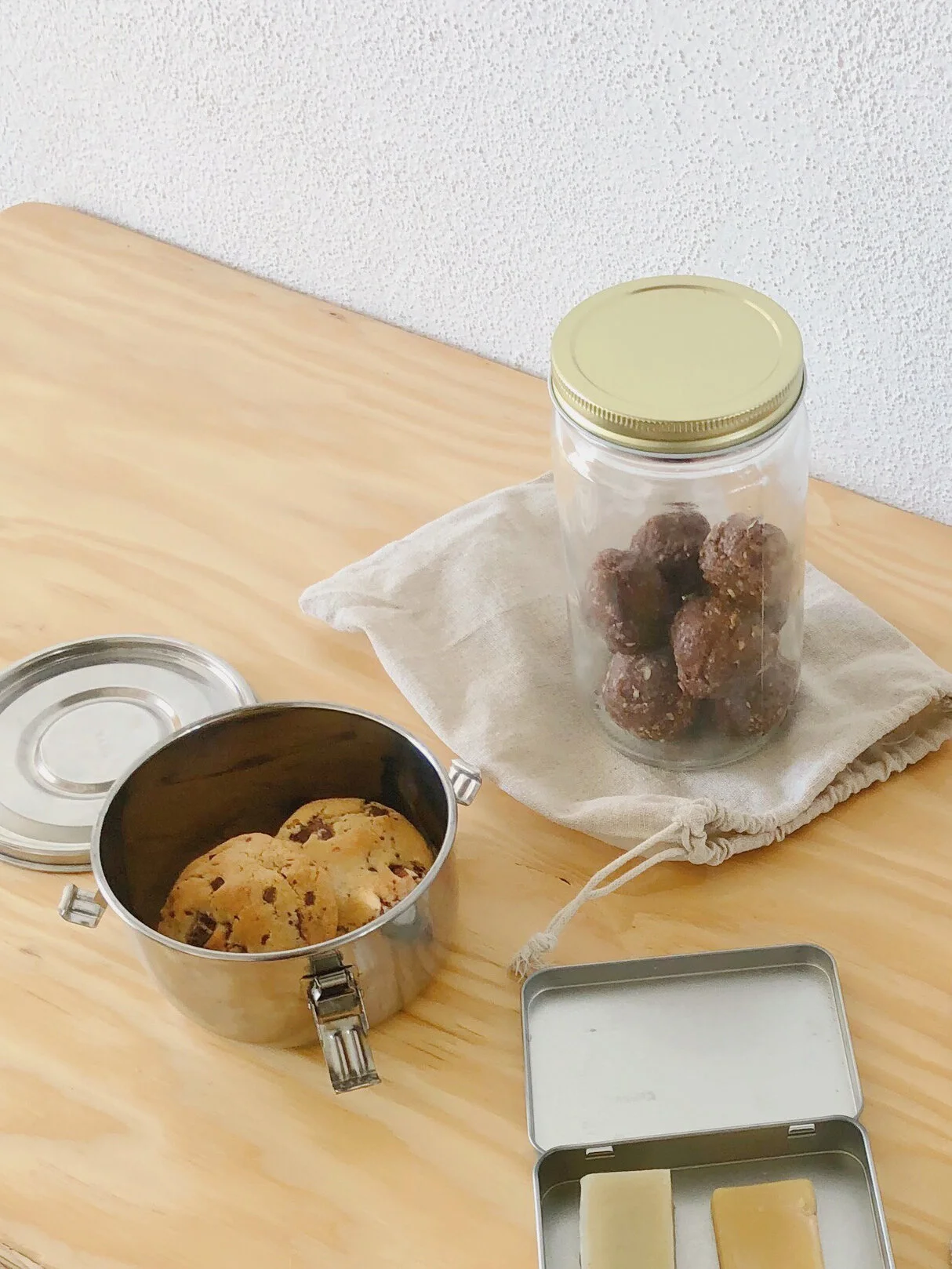
Bring your own containers for leftovers (just in case)! I don’t think I’ve ever been to a Thanksgiving gathering and not been sent home with a plastic Tupperware full of leftovers. This year, I’ll be bringing my stainless steal or glass reusable containers to bring home the goods.

If you’re going out of town, unplug unnecessary electronics to lower your footprint. If you plan to leave the lights on for safety reasons, get a timer so they’re not on 24/7 (and use L.E.D. lightbulbs)!
I’d love to hear if you have any other tips on sustainability for the holidays this year!