
Capstone: Taking Compassionate Action
In November of last year, I graduated from Stanford University CCARE’s Applied Compassion Training after eleven months, and am now a certified educator and facilitator in compassion & mindfulness. To complete the course, I had to create and deliver a capstone project. My project involved writing an 80+ page e-book titled “Taking Compassionate Action: A Compassionate Guide to Navigating Burnout, Imposter Syndrome, and Difficult Conversations to Further Resilience, Take Action, and Create Positive Change.”
This written guide focuses on helping activists remain resilient through their work, which heavily involves witnessing the suffering of others. It is geared towards both beginners and seasoned activists (or anyone who wants to help, take action, or create change).
My capstone acts as a toolkit that can be read through in its entirety or pulled out and used during different types of challenges. You can download the e-book in its entirety below. If you would like to connect with me regarding my capstone, you can reach me at kristine@claggie.com.
Mindful communication over the holidays
How to approach conversations to deepen understanding and connection.
The holidays can often feel like a whirlwind this time of year. We may find ourselves in quite a few social settings: family gatherings, holiday parties, getting together with friends, etc. Conversations in these types of settings can be stressful and overwhelming. Here are some tips to make sure you’re communicating mindfully this season.

Tips for mindful communication over the holidays
Lead with intention. Going into the holidays with a clear intention helps us practice the essential skills of listening with curiosity, caring about the other person’s needs beneath their words, creating an intimate connection, and sharing the conversation as a collaboration. It can also keep us connected to our own needs and help us remain calm during conflict.
What values do you wish to bring to the table? Here are some words to consider when thinking about your intention:
connection
understanding
patience
care
kindness
presence
compassion
empathy
breathe
Stay anchored. A good rule of thumb mentioned in Kelly McGonigal’s Science of Compassion is to practice placing 95% of your attention on the other person while keeping 5% of your attention on your body. Anchoring your attention in your body will help you distinguish the self from the other and will also help keep you present. I like to pay attention to my seat on the chair, feeling the weight there. You can also focus on your breath, your hands, or whatever else feels best for you.
Take time to pause. Remember that you do not have to respond right away or rush through a conversation. Slowing down your pace gives your brain time to make sure you choose your words wisely. Taking time to pause also helps you collect your thoughts. I like to pause and take a breath before responding. It allows me to stay calm and remember my intention.
Reflect what you’ve heard before responding. Once someone has paused or finished speaking, take time to reflect and share what you’ve heard to ensure you understand the meaning behind the words. This is a great way to make sure the other person feels heard and that you recognize the needs behind what they’re saying.
Receive vs. give advice. If you ever notice yourself focusing on your response while someone else is speaking, you’ll find this tip helpful. Making sure a person feels heard requires fully listening to what they’re saying. Most people share because they want to connect, not because they want you to solve something for them. Try asking before offering advice next time you’re in a conversation. First, reflect what you’ve heard back to the speaker to make sure you understand. Then, you can ask, “Are you open to hearing my thoughts?” or “Are you looking for advice?”
Have boundaries and know your limits. Although mindful communication is a wonderful skill, it’s imperative also to state that there are instances when conversations can be unsafe places. Suppose you are dealing with someone who does not respect you or your boundaries, shows signs of prejudice, has violent or dangerous tendencies, or is simply unwilling to listen. In that case, it is best to exit that conversation. Putting your safety and well-being first is something you should never forget, especially when going into a conversation with someone you know has these tendencies. Mindfulness may actually help give you the space to pay attention to your own needs, letting you know when to leave a situation that is not helpful.
Here’s a partner practice to try if you want to strengthen your mindful communication skills:
Compassionate Conversations
Compassionate conversations are a meaningful approach to use when we want to increase the possibility of a conversation rooted in meaning, deep connection, understanding, curiosity, and discovering underlying needs and wants.
This practice is based on:
Practicing presence both as the speaker and the listener.
Being aware of yourself, the other, and the space between you. This involves slowing down, connecting, and reflecting before automatically responding.
Deciding what or who is being centered in the conversation. Whose needs, wants, or perspectives are being prioritized at this moment?
Training to listen for, attune to, and recognize what is most needed and essential from this conversation.
Practicing compassionate conversation includes the below skills:
As a speaker: Practice presence while speaking by connecting with an anchor. You can choose to anchor yourself in your breath, feeling your seat on the chair, your feet on the floor, or whatever feels best for you. Experience sharing as an embodied experience and notice when attention to the body begins to stray. Slow down and allow space by pausing and taking a breath before continuing to share. This allows space for speaking intentionally and gives the listener permission to reflect on what you’ve shared.
As a listener: When you are the listener, listen with generosity, broad awareness, and perspective. Lean in with your entire body, feeling how what you’re hearing affects you. Let your awareness be like taking in a view of nature, admiring a work of art, or listening to a song.
Mirroring: Reflect the content you’ve heard like a clear mirror, without your own judgment or biases. Try to avoid your own stories, your desire to fix or give advice, and judgments while you make sure you are understanding what has been shared.
Observing: Look at the whole picture. What are you seeing and hearing in your environment? Try to put it in terms of observation: a clear, concrete description that includes specifics and context. This is not an evaluation, analysis, judgment, interpretation, or diagnosis.
Recognizing: Ask permission to make a guess based on the above practices and sometimes instinct about what’s not being said, or the subtext, about what’s most important or needed.
In this practice, each person will have the opportunity to share something that has some significance in their life at the moment: an incident, situation, or event you would like to receive compassion and empathy. It could be something that is bringing you joy or something difficult you are experiencing. Please do not choose something too intense or challenging, or strong emotions will likely flood the exercise and get in the way of learning (at least when you first start this practice). If strong emotions arise, you have the option to turn toward them within this practice as well.
In this practice, you will try to:
Practice presence both as the speaker and as the listener.
Practice relational awareness, which often includes slowing down. As the speaker, you may want to have a loose focus on your breathing to remind you to slow down your pace. As a listener, connect and reflect with what you’re hearing before planning your response or automatically responding without intention.
Choose what is being centered in the conversation. Whose needs, wants, and perspectives are being prioritized at this moment?
Train yourself to listen for, attune to, and recognize what is most needed and essential.
Take a couple of minutes to greet each other.
Decide who will speak first and who will listen first.
If you are the speaker, first bring up what you will be sharing with your partner. If you’re listening, shift around in your chair, so you’re sitting with a posture of embodied listening (comfortable, but alert).
Set a timer for 3-5 minutes. The speaker will have 3-5 minutes to share while the listener simply listens.
SPEAKER: As you share, practice leading with presence. Allow yourself to speak at a pace that enables this. Give yourself space to pause and connect with an anchor that supports being present. This anchor may be breathing, slowing down, or feeling the contact between your body and the chair or your feet on the floor.
LISTENER: While the speaker is sharing, practice listening in these ways:
Embodied with your whole body, mind, and heart. Just listen. You are offering your complete attention without dissolving into the other person’s story. Keep some awareness of your own anchor, remaining present throughout.
Practice reflecting on some of the content your partner has shared. This is not responding with your thoughts or advice but mirroring what the speaker shared back to them to make sure you understood the content. Be sure to try this out at least once during your partner’s sharing. Times to offer a reflection are after a chunk of a story that is being shared or when you notice your mind begin to wander off or lose track of the story or details. You can also practice reflecting during any pauses in the conversation. Another critical time to reflect is before you direct a response. Here are three ways to try out offering a reflection:
Stay Connected: You can say something like “I just wanted to make sure I’m still with you” or “I want to make sure I’m understanding correctly” and then share back the last few things you heard as the listener.
Reflect the Headlines: Summarize the gist of what someone has shared using their words as much as possible.
Repeat the speaker’s last three words. Give a bit of space to make sure they’re finished, and you can say something like, “Can you say more about this?”
LISTENER: After the 3-5 minutes are up, take a guess at what matters most to the speaker if you feel comfortable doing so. Let the speaker finish their thought and sit quietly for a few moments. During that minute, consider what mattered most to the speaker. Beneath the story, its details and what happened, what matters to them? Then, take a guess at what is most important to the speaker. Listener, you are not advising, telling, or directing the speaker. You are offering a guess at what’s essential or matters to them.
SPEAKER: Respond authentically to this guess.
Debrief for a few moments by thanking each other. Say something appreciative about what the other person offered to you. “Thank you for allowing me a safe space to share openly.” “Thank you for trusting me and being open to sharing this with me.”
Switch roles, resetting the clock for 3-5 more minutes. Repeat the practice.
TO CLOSE: Letting go of any particular speaker or listener role, share what you’ve learned from the experience.
What was it like to listen in this manner? What was familiar or different from the way you often listen?
How was it to be listened to in this way?
What was it like to listen with your whole body?
What was it like to reflect the content of what was shared? Rather than give advice, or problem-solve right away? How is reflecting the speaker’s content similar or different from how you often respond to someone speaking?
What was helpful about making a guess and asking what matters most? What was useful about receiving a guess as a speaker?
If you’re interested in a guided practice, I recommend the Shared Identity Practice. In this guided exercise, you’ll be thinking of a person in your life who seems to be very different from you in every way that you can imagine. They might have different interests, different religious or political beliefs, or different life experiences. They may even be someone with whom you have had a personal conflict or who belongs to a group that has been in conflict with a group to which you belong. You will be working through finding commonalities.
The positive impacts of mindfulness
Mindfulness is awareness of what’s happening in the present moment without judgment but with acceptance. It includes being aware of your feelings, thoughts, bodily sensations, and the environment around you through a gentle, nurturing, and balanced lens.
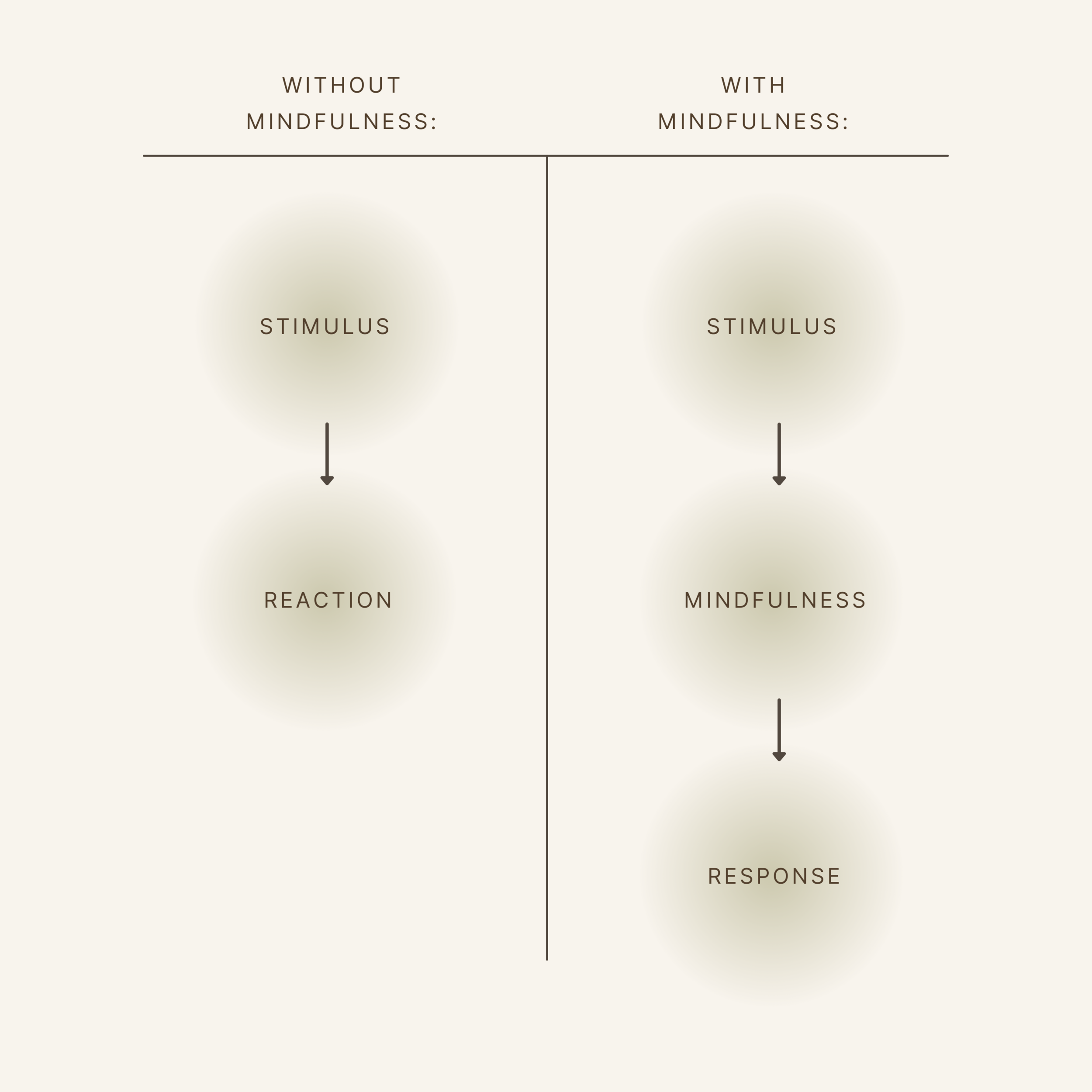
When we practice mindfulness, we tune into the present moment. What are we experiencing right now? What are we feeling in the body right now? This keeps us from dwelling on the past or worrying about the future.
Being present wakes us up to our own lives. The more aware we are from moment to moment, the more choice we have regarding how we react to our experiences. Much of the time, we run on autopilot.
The benefits of practicing mindfulness
There is a plethora of research showing the benefits of practicing mindfulness. Berkeley’s Greater Good Science Center lists these positive impacts:
Mindfulness is good for the body. Mindfulness meditation helps boost our immune system and improves sleep quality.
Mindfulness increases positive emotions while reducing negative emotions and stress.
Mindfulness changes our brains: Research has found that it increases the density of gray matter in brain regions linked to learning, memory, emotion regulation, and empathy.
Mindfulness helps us focus: Studies suggest that mindfulness helps us tune out distractions and improves our memory, attention skills, and decision-making.
Mindfulness fosters compassion and altruism. Research suggests mindfulness training makes us more likely to help someone in need and increases activity in neural networks involved in understanding the suffering of others and regulating emotions. Evidence suggests it might boost self-compassion as well.
Mindfulness affects the way we see ourselves: People who are more mindful have a stronger sense of self and seem to act more in line with their values. They may also have a healthier body image, more secure self-esteem, and more resilience to negative feedback.
Mindfulness can help combat bias. Even a brief mindfulness training can reduce our implicit biases and the biased language we use.
Slowing down to act
There is a lot of urgency that comes with activism and advocacy work. For example, the climate crisis is no longer just a future threat. It's already here, and we are nowhere near the best-case scenario when it comes to what our future may look like. Urgent and drastic measures must be taken to ensure a future for all humans on our planet.
This type of stress and pressing need has led to experiences of burnout, anxiety and depression, and feelings of failure and helplessness (at least for me personally). It's difficult to imagine slowing down when the world is literally on fire, but sometimes allowing the space to take a breath and be present allows our awareness to shift from rumination to solution-based thinking. Simply put, when we are able to remind ourselves to stay present, we are better equipped to act.
I'll share a personal story to give an example of the idea of slowing down to act. When I first started diving into the bottomless hole of climate change research, I was overwhelmed with the feeling of panic and urgency. A friend brought up in a conversation with me, that learning about how our actions contribute to climate change is so overwhelming to her, that it keeps her from acting altogether. At that moment, I snapped back with examples of simple things she could do to lower her footprint, which kept me from truly hearing her.
My immediate response added to her stress and I could see her begin to shut down. Naming a list of things to do to someone who is feeling overwhelmed is not helpful. If I would have taken a moment to pause and really listen to her, I would have been able to see the needs beneath her words, that it wasn't about the lack of desire to act, but more so that the topic itself is so all-consuming she didn't know where to begin.
Once I realized what I had done, I was able to apologize for adding to her stress and we went on to have an incredibly positive conversation about the burnout associated with issues like climate change, even though individuals aren't the ones most at fault for what is happening to our environment. Both of us slowed down in that conversation and were able to talk through ways we felt we could make a difference while also taking care of ourselves.
When we allow ourselves the time to pause and settle our minds, we are much more likely to lead our actions, conversations, and experiences with presence, humility, intimacy, curiosity, and acceptance.
Three good things:
Stanford University will be powered entirely by renewable energy in 2022.
Paul Hawken’s new book Regeneration: Ending the Climate Crisis in One Generation
This kitten wearing a crocheted mushroom.
An action to take:
A scholarship for aspiring female cinematographers has been established to honor the memory of Halyna Hutchins. If you are willing and able, consider donating here.
Sources:
Replacing self-criticism with self-compassion
How to be less hard on yourself.

Most people find that when their minds are absorbed in self-criticism and self-judgment, they have very little bandwidth left over to think about anything other than how poorly they feel about themselves and their lives. Have you ever thought no matter how hard you try, it’s never enough? Do you base your self-worth on your success? When you fail, do you beat yourself up and let it ruin your day?
This is very common. We’re taught that the key to happiness is having high self-esteem. The problem with basing our worth on our self-esteem is that we only feel deserving and valuable when we succeed. We are constantly competing with others (and ourselves) to prove that we’re special, above average, better than, etc. It’s impossible for us all to be “above average” at the same time.
Kristin Neff, a pioneer in the field of self-compassion research, shares in an article titled Self-Compassion, Self-Esteem, and Well-Being: The emphasis placed on self-esteem in our society has also led to a worrying trend: The narcissism scores of college students have climbed steeply since 1987, with 65% percent of modern-day students scoring higher in narcissism than previous generations (Twenge, Konrath, Foster, Campbell, & Bushman, 2008). Not coincidentally, students’ average self-esteem level rose by an even greater margin over the same period. Although narcissists have extremely high self-esteem and are quite happy much of the time, they also have inflated, unrealistic conceptions of their own attractiveness, competence, and intelligence, feeling entitled to special treatment (Twenge & Campbell, 2009).
So, what is self-compassion, and how does it help?
Self-compassion involves treating yourself with the care and concern you would give a friend when confronted with personal inadequacies, mistakes, failures, and painful life situations. It consists of three interacting components, each of which has a positive and negative pole:
Self-kindness vs. Self-judgment
A sense of common humanity vs. Isolation
Mindfulness vs. Over-identification
Research suggests self-compassion is strongly related to psychological well-being, personal initiative, motivation, accountability, increased happiness, optimism, and connectedness, as well as decreased anxiety, depression, neurotic perfectionism, and rumination (Reff, Nude, & Kirkpatrick 2007).
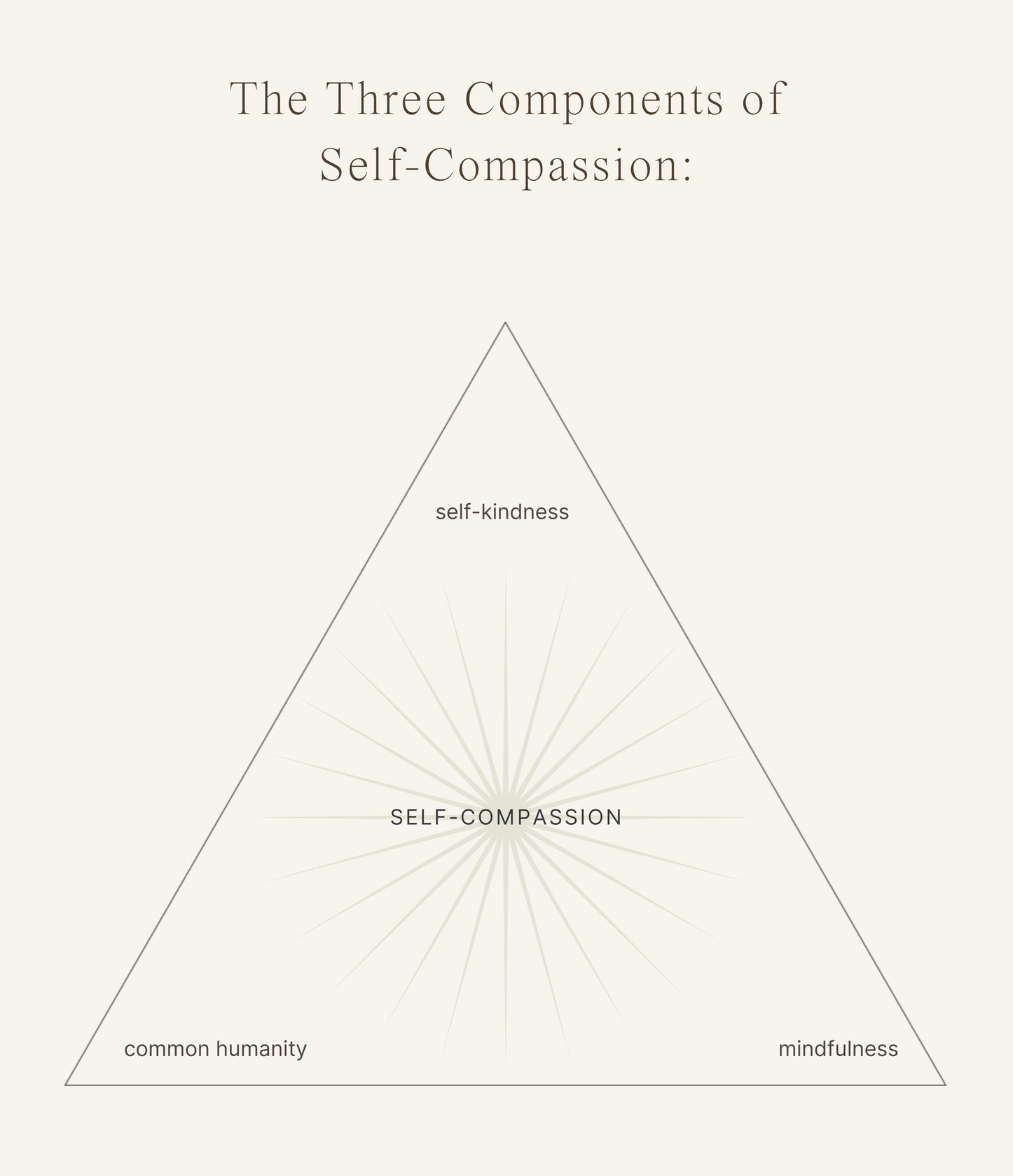
Self-compassion involves self-kindness, which refers to being caring and understanding with oneself rather than harshly judgmental. Instead of attacking or berating oneself for personal shortcomings, the self is offered warmth and unconditional acceptance.
It also includes common humanity. This involves recognizing that humans are imperfect, that all people fail, make mistakes, and have serious life challenges. By remembering that imperfection is part of life, we feel less isolated when we are in pain.
Mindfulness is another important aspect of self-compassion. Mindfulness in the context of self-compassion involves being aware of one's painful experiences in a balanced way that neither ignores and avoids nor exaggerates painful thoughts and emotions.
There’s a common misconception that shifting self-criticism to self-compassion will lower levels of motivation to better oneself. Research indicates the opposite effect. Self-compassionate individuals have less fear of failure and are more likely to try again when they do fail. Tapping into self-compassion by treating yourself with the care and concern you would give to a friend is a great way to overcome shutting down or ruminating during difficult times. It also recognizes common humanity, that all humans suffer. We all experience failure, go through serious challenges in life and are imperfect.
Here are some common misconceptions related to self-compassion (also known as the five myths of self-compassion):
Self-compassion is a form of pity. This is not the case. Practicing compassion for the self and others actually helps one avoid pity. Compassion is about accepting, experiencing, and acknowledging all things that occur, both good and bad.
Self-compassion is considered a weakness. Caring for the self and others is actually a strength. Research shows that compassion is a powerful resource for coping with difficult situations and having the resilience to pull through.
Self-compassion will make one complacent. We often criticize ourselves for the failures we experience in life, feeling that being kind to ourselves will not give us the motivation we need to succeed in the future. A torrent of shame and criticism may make one work harder in the moment due to fear of failure and punishment, but it will not help build your confidence or give one the support one needs to succeed.
Self-compassion is narcissistic and selfish. Self-compassion is not a judgment of the self or others. It is a way of accepting our experiences, whether positive or negative, and knowing that we’re not alone in the feelings we have. Self-esteem keeps us judging and comparing ourselves to others, while compassion helps us relate our experiences to others. Self-compassion helps us through the good and bad times, while self-esteem tears us down when we don’t succeed.
Click here for a ~20-minute guided meditation that will help you cultivate compassion for your own stress, difficulties, insecurities, and suffering.
Three good things:
This post about helping & supporting others by @ablackfemaletherapist.
This beagle is proof that you can always love again.
Season three of Sex Education on Netflix. Mark and I devoured this season way too quickly!
Three actions to take:
Read this Twitter thread by @RainofTerra about the harm caused to Trans people through Netflix giving the TERF ideology a platform via Dave Chapelle’s comedy special. Sign this petition for Netflix to remove this special.
Consider donating to The National Center for Transgender Equality.
If you’re interested in bringing more compassion into your life, I highly recommend this Compassion Cultivation Training. The Applied Compassion Training program I’m getting ready to graduate through Stanford opened up their 2022 registration!
Sources:
Self-Compassion, Self-Esteem, and Well-Being
Compassion vs. Empathy
One of the most interesting topics I learned when I first began taking courses centered around compassion was the difference between compassion and empathy. These words are often thrown around in the same context, and distinguishing the two from each other can help keep us from experiencing burnout and shutdown.
Compassion and empathy are related to each other, but they are not the same. Empathy refers to the more general ability to take the perspective of and feel the emotions of another, while compassion is when those feelings and thoughts include awareness of suffering and the desire to help.
Empathy involves feeling another person's emotional experience as if it were one's own. It is the general capacity to resonate with the feelings of another, including both the positive and the negative. Feeling another person's negative emotional experience may lead to empathic distress, a self-oriented response to suffering, which we will explore in more detail later on.
Compassion is the feeling of concern for another's suffering, accompanied by the motivation to help alleviate the suffering. It involves paying attention to the condition of others/ourselves/the world, being moved by the suffering we witness, feeling the desire to help relieve that suffering, and taking action to alleviate it. Compassion is other-oriented, feeling for instead of feeling with the other. This difference helps to drive action instead of withdrawal.
Empathy is often unintentionally or automatically sharing the feelings of others, which includes both positive and negative emotions. Compassion is directly linked to suffering.
A study by Tania Singer and Olga M. Klimecki revealed that several days of empathy training led to an increase in self-reported negative affect. In contrast, subsequent compassion training in the same participants could reverse this effect by decreasing negative affect and increasing positive affect. Compassion also shows up in regions of the brain that empathy does not. You can read the study here.
Empathy can lead to compassion (a positive response that leads to action). Still, it can also lead to what I mentioned earlier, empathic distress (a negative response that can lead to shutdown/burnout/overwhelm).

What is empathic distress?
Empathic Distress is a self-oriented response to suffering, where one is more upset by another's suffering than concerned for the other. It is accompanied by disassociation to reduce one's own distress and protect oneself, which gets in the way of a compassionate response.
Empathic distress may also promote indifference to others' suffering or lead to taking on the role of a "bystander," someone who adjusts their feelings to match a noncommittal stance when the suffering of another is too overwhelming.
The opposite is also true. Kelly McGonigal speaks of empathic distress leading to "pathological altruism" in her book, The Science of Compassion. This is when the action of helping is not rooted in compassion; it is just an attempt to escape or reduce one's own stress, guilt, discomfort, etc. A person will help others because they want to make themselves feel better. This can lead to unskillful behaviors like enabling or becoming a martyr.
What can be done to avoid responding in this way?
Mindfulness is such an incredible tool we can use to allow ourselves to be present with the direct experience of suffering. I’m going to share a practice I learned in Stanford CCARE’s Applied Compassion Training, a course I’m getting ready to graduate from. This exercise is called the Compassionate Presence and Inquiry Practice. It combines principles of compassion with principles of mindfulness, all of which are aimed at cultivating and strengthening our ability to be present with our experience directly. This is in contrast to what we normally do, which is: analyze, assume, judge, rationalize or try to ignore our experience completely. This practice acts as a pathway towards meeting suffering, which helps lead us to a compassionate response.
You are encouraged to connect with the following qualities throughout the practice:
Presence: Learning to stay with and observe the experience without judgment.
Curiosity: Coming into the practice with an open mind.
Intimacy: Allowing ourselves to get close to our experience in the way we would get close to a friend or loved one.
Humility: Approaching our experience as a journey of discovery, beginning with the willingness not to know the answers ahead of time.
Acceptance: Choosing to decide that whatever we encounter during this practice will be met with a sense of warmth and acceptance. Allow the experience to be exactly as it is.
Self-Compassion: Bringing care and support to our experience, especially to the parts of us that are suffering.
During this practice, we will rest in the direct experience, focusing on the ‘what’ and ‘where’ instead of the ‘why.’ Here are some examples of ‘what’ and ‘where’ questions:
What is arising for me at this moment?
Where do I experience this in the body?
What sensations are present right now?
What is it like to turn attention towards this experience and the sensations it evokes?
Experiencing painful or difficult emotions can often trigger thoughts that are self-critical and unhelpful. Thoughts like: “When will this end?” “Why is this happening to me?” “I can’t handle this.” “What is wrong with me?” “Why does it feel like nothing is going right?”
These types of thoughts take us out of the actual experience and can add to increased feelings of judgment, shame, or worthlessness if we believe them. These feelings can lead to further suffering.
Compassionate Presence and Inquiry is the practice of seeing our thoughts AS thoughts instead of as facts. Thoughts will naturally come and go throughout the practice. That is part of being human. We can label these thoughts as thoughts instead of treating them as truth. We can recognize them as thoughts and then gently return our attention to the direct experience as it unfolds in the body.
The experiences of pain and suffering are often perceived in our minds as “too much to bear.” In this practice, we will trust in our capacity to meet with our direct experience within the context of each moment, sensation by sensation.
Click here to move through the audio of this practice.
Three good things:
Music created by a leaf from an old-growth forest using the changes in its bioelectric field to trigger the notes.
My friend Olivia Fleming produced The Helm’s first digital magazine, which focuses on the future of women’s healthcare. Such an important topic!
This spicy roasted tomato soup recipe I can’t wait to try. Even if you don’t love to cook, the video is extremely relaxing to watch (but it might make your stomach growl).
Three actions to take:
Call or write your Senators and Representatives to demand we stop Title 42 deportations of Haitians seeking asylum at the Texas border. You can also donate to the Haitian Bridge Alliance to help those on the ground at the border.
An entire super pod of over 1,400 white-sided dolphins was killed last week on the shores of the Faroe Islands (including pregnant females and calves). Add your voice to this petition, asking the Faroese Prime Minister Bárður á Steig Nielsen to stand against the slaughter of dolphins.
Since 2000, Indigenous people have made up 21% of homicides in Wyoming, even though they are only 3% of the population. This is not to belittle the horrific death of Gabby Petito, but to shine a light on the amount of missing Indigenous people (mostly girls) that do not get the same amount of media attention. You can read about this here and here.
Thank you for reading!
Kristine
Sources:
Empathy and Compassion by Tania Singer & Olga M. Klimecki
What is Compassion? by The Greater Good Science Center at Berkeley
The Science of Compassion by Kelly McGonigal
Compassionate Presence and Inquiry Practice from Stanford CCARE's Applied Compassion Training
Why do we fixate on the negative? And is it possible to change?
Imagine waking up in the morning feeling refreshed, the sun is shining in through the window, and you see that today's weather is going to be perfect. You just picked up groceries yesterday, so you make yourself your favorite meal for breakfast. Today's plans include going on a hike with a loved one, and you're excited to spend the day in nature.
On the trail, you feel a nice breeze, and you have the entire landscape to yourself. You and your hiking partner start to have a conversation, and something they say rubs you the wrong way. It's not anything significant, just enough to make you feel off. It sticks with you for the rest of the day, hijacking your mind, even after the conversation ends. You ruminate on what they meant and make up stories in your head to further the narrative.
Fast forward one month, six months, a year — what do you remember about that day? The perfect weather? The delicious breakfast? The beautiful nature? No, you most likely remember what was said that made your stomach flip. Your body remembers how you felt, fixating on what went wrong.
If you can relate to this, have you ever wondered why that is? Why do we obsess over the negative? And why is it so hard to get back to a balanced state when something happens to us, whether it's big or small?
The answer is negativity bias, and it's something inherent in all humans.

So, what is negativity bias?
Humans are prone to negativity bias, which means that the brain preferentially looks for negative information, or threats, over positive information. It also means we dwell on the negative.
John Gottman of the University of Washington has found that it takes at least five positive interactions within a relationship to make up for just one negative one. If a friend or loved one says five kind things to us and one thing that is frustrating, we're much more likely to mull over the latter.
Negativity bias is an evolutionary trait from early human history. Paying attention to threats (the bad, the negative, the dangerous) over the positive was a matter of life and death. Those who paid more attention to the dangers around them were more likely to survive, passing this trait down to future generations.
This bias was useful when we were vulnerable to the threats of nature on a consistent basis, but now even as we have evolved, we retain this ancient trait in our brain, which responds involuntarily to any threats that come our way. At one time, this protected us, but now it interferes with our ability to function in the modern world, where the threats we experience are much more subtle (and less life-threatening).
The threats we process now may look like:
seeing your boss calling you unexpectedly
being stuck in traffic on your way to an important event
a friend not responding to a text
a miscommunication with a partner
dropping a mug full of coffee
confrontation of any kind
etc.
Have you ever had a situation like this cause you to react much stronger than you felt appropriate? When an instance of negativity bias is particularly severe, it can lead to something called an amygdala hijack.
What happens when we experience an amygdala hijack?
The amygdala is a collection of cells located near the base of the brain, split between each hemisphere. This is where emotions are given meaning and attached to associations and responses, creating emotional memories. The amygdala is considered part of the brain's limbic system and is crucial in processing strong emotions like fear and pleasure.
An amygdala hijack is when the fight, flight, or freeze responses activate when we experience something that we perceive as threatening but isn't actually a threat at all. You might hear your phone buzzing and someone calling unexpectedly. In that instant, you might notice your heart rate increases, your palms begin to sweat, and your breath quickens.
When the amygdala senses danger or a threat, it makes an instantaneous decision to activate the fight, flight, or freeze response by sending out signals to release stress hormones (adrenaline and cortisol) that prepare your body to fight or run. The release of these hormones leads to the experiences I shared a minute ago: increased heart rate, increased blood pressure, rapid breathing, racing heart, shaking, sweating, etc.
When cortisol is released, it can physiologically render us incapable of responding rationally, concentrating, or problem-solving for a period of time. This process takes a toll, and it may take several hours to return to our original level of function.
An amygdala hijack can lead to overreacting, saying things we don't mean, having a panic attack, and irrational behavior. If you've ever looked back on an experience and asked yourself, "Why did I react like that?" This might be your answer.
Is there anything I can do to change this?
The good news is, yes. To prevent an amygdala hijack, the first thing we can do is identify the trigger. When we start to feel our bodies go into the initial mode of fight, flight, or freeze — try to pause for around six seconds and take a few deep breaths. This pause, coupled with breathing, helps diffuse the brain chemicals associated with the hijack.
A practice that helps prevent future amygdala hijack is the practice of mindfulness.
Mindfulness is awareness of what's happening in the present moment, without judgment, but with acceptance. It includes being aware of your feelings, thoughts, bodily sensations, and the environment around you through a gentle, nurturing, and balanced lens.
When we practice mindfulness, we tune into the present moment. What are we experiencing right now? What are we feeling in the body right now? This keeps us from dwelling on the past or worrying about the future.
Practices you can do to help:
Settling the Mind is a mindfulness practice that includes settling our attention around a specific anchor. We use an anchor as a way of steadying our attention and remaining present. We'll be exploring the different types of anchors, allowing you to find what works best for you. This practice is around ten minutes in length. To prepare, find a seated position that allows you to feel supported and at ease while also staying alert and awake. The audio for this practice is linked here.
Another way to work through negativity bias is through this practice by psychologist Dr. Rick Hanson called Taking in the Good. This practice involves creating more positive experiences for your implicit memory to hold onto, making them a permanent part of you. Here are the three steps of this practice:
1. Turn positive facts into positive experiences.
Wonderful things happen all around us, but much of the time, we don't notice them. Even when we do, we hardly feel them. Someone is kind to you, you share a meaningful conversation with a friend, you finish a difficult task, you enjoy a walk through nature—and it all just rolls by.
Instead, actively look for good news, particularly the small details of daily life: a deeply rooted tree on a walk, the smell of a home-cooked meal, a happy memory, meeting someone that shares your passion for justice, and so on. Whatever positive tidbits you find, bring mindful awareness to them—open up to them and let them affect you. Think of it like putting on headphones to listen to your favorite song, and closing your eyes to savor the music instead of putting it on as background noise.
2. Savor the experience.
Make positive experiences last by staying with them for 5-20 seconds. Don't let your attention waver; stay focused on this positive experience. Loyola University psychologist Fred Bryant has shown that savoring positive experiences intensifies our positive response to them. And research by Marc Lewis at the University of Toronto has found that the longer something is held in awareness and the more emotionally stimulating it is, the more neurons that fire and thus wire together, and the stronger its trace imprints itself into our memory.
Pay close attention to the rewarding aspects of the experience—for example, how good it feels to get lost in a conversation with a friend or loved one. Focusing on these rewards increases dopamine release, making it easier to keep giving the experience your attention. It also strengthens its neural associations in your implicit memory (the information you remember subconsciously or effortlessly). You're not doing this to cling to the rewards—but rather to internalize them so that you carry them inside you and don't need to reach for them later.
You can also intensify an experience by deliberately enriching it. For example, suppose you are savoring a relationship experience. In that case, you could call up other feelings of being loved by others, which will help stimulate oxytocin—the "bonding hormone"—and thus deepen your sense of connection. Or you could strengthen your feelings of satisfaction after completing a demanding project by thinking about some of the challenges you had to overcome.
3. Let the experience sink in.
Finally, imagine or feel that the experience is entering deeply into your mind and body, like the sun's warmth into your clothing or water into a sponge. Keep relaxing your body and absorbing the emotions, sensations, and thoughts of the experience.
Three good things:
In an attempt to stop illegal trawling, an Italian fisherman named Paolo Fanciulli persuaded sculptors to create huge marble artworks that were then dropped into the Mediterranean. Read the inspiring story.
Oren Jay Sofer is offering a 12-week course, Say What You Mean: A Mindful Approach to Nonviolent Communication (based on his book of the same name), starting on September 29th. I took this course last fall and got so much out of it. If you’d like to improve your communication habits/skills, I highly recommend looking into it.
This Compassion Conversation Series by my colleague through Stanford's Applied Compassion Training, Signe Jung, who works as a coach with international development and policy professionals to prioritize well-being and compassion.
Siren, a sculpture by Giorgio Butini, is overgrown with marine vegetation in the underwater museum off Talamone, Tuscany. Photograph: Marta Clinco
Three actions to take:
With all of the disasters happening around the world, it's important that we donate to organizations that are legitimate. You can use Charity Navigator and Give Well to make sure you're giving to the right places.
Learn about how to Stop Line 3 via this link, and if you can, offer support to the Lakota People's Law Project. Your donations help support the rights and sovereignty of the Lakota people, amplify issues critical to Indigenous communities, and empower their mission for justice.
If you are willing and able, consider donating to Project Hope. They are helping those affected by the earthquake in Haiti, Hurricane Ida, those affected by the surge of Covid-19 in India and Nepal, amongst many other causes.
Thank you for reading!
Kristine
What is Compassion?
Compassion is conceived as a state of concern for the suffering or unmet need of the self or another, coupled with the desire and commitment to help alleviate that suffering.
To break it down into bitesize points, compassion is:
Awareness of suffering
Feelings of warmth, care, and tender concern
A genuine wish to see the relief of that suffering
A readiness to take action in some way to relieve that suffering

Compassion is related to empathy and altruism, but they are not the same. Empathy refers to the more general ability to take the perspective of and feel the emotions of another, while compassion is when those feelings and thoughts include awareness of suffering and the desire to help.
Altruism is when we act selflessly to promote someone else’s welfare, even at a risk or cost to ourselves. It can often be prompted by compassion, but it isn't always.
Some may dismiss compassion because they see it as touchy-feely, overly sensitive, or weak, but scientists have started to map out compassion's biological basis. This suggests its deep evolutionary purpose. Costly, self-sacrificial behavior rooted in maternal care for vulnerable offspring has evolved in many ways. Living in a community setting, one is much more likely to survive if compassionate for others around them.
This research has also shown that when we feel compassion, our heart rate slows down, we produce the hormone oxytocin, which calms us, and regions of the brain linked to empathy, caregiving, and feelings of pleasure light up, which often results in our desire to approach and care for other people.
If this sounds interesting to you, you’re in the right place. I’m excited to share more about compassion with you going forward. This newsletter will feature practices, meditations, and exercises that you can do to strengthen your compassion and mindfulness. I look forward to continuing on this journey together!
Three good things:
I’ve been listening to The Science of Compassion by Kelly McGonigal and am loving how she shares neuroscience-based evidence for the lessons she’s teaching. I recently re-listened to a section on empathic distress, which is a topic I’m working on covering in a future issue. I borrowed it from my local library using the app Libby (another one of my favorite things).
This dried buckwheat from a friend’s yard. I think of them whenever I enter the room, and it makes me smile.
Four actions to take:
If you live in California, I urge you to vote “NO” in the upcoming recall election. The election is on September 14th, but you can vote earlier by mail or by going to a vote center (open from September 4th through September 14th). Learn more about the election and where to vote here. You can learn more about the frontrunners here. If either of the Republican frontrunners were to win this recall (which will happen if Newsom does not get 49.9% of the vote), this would flip the senate and result in disastrous rollbacks on initiatives that address the climate crisis, COVID-19, minimum wage, reproductive rights for women, public education, healthcare, support for immigrants, justice reform, etc.…
Support Afghan women through Women for Women International. If you are willing and able, donate what you can to help Afghan women during this time of uncertainty.
Donate to Hurricane Ida Relief & Recovery if you are able.
Learn about how to Stop Line 3 via this link, and if you can, offer bail support by sending a donation via Venmo to @stopline3.
Discount Codes
I wanted to share some of my favorite brands, ones that I’ve vetted and truly support. Some of the links below are affiliate links (I’ll mark those with an asterisk). If you feel uncomfortable with affiliate links, don’t feel pressured to use them! I mostly wanted to include all of the discount codes I have available in one place, in hopes that it will help make some of these brands more accessible. I’ve organized everything in sections to make it easy to navigate! Feel free to reach out to me if you have any questions about the brands below.

F A S H I O N
20% Off Discount Code: Kristine20 *EXPIRED
Jenni Kayne is a California-based lifestyle brand that focuses on timeless, classic pieces that you’ll wear forever. Two of my favorites are the recycled boyfriend sweater (35% alpaca, 35% RWS wool, 30% recycled polyester) and the recycled fishermen sweater (68% recycled cashmere, 30% cotton, 2% recycled wool).
Upcycled cashmere uses 80% less electricity, 98% less water, and 90% less carbon dioxide than non-recycled alternatives. RWS stands for “Responsible Wool Standard,” which ensures the welfare of animals and the land they graze on.

10% Off Discount Code: wandr10
Whimsy + Row is an eco-conscious lifestyle brand located in Venice, California. Their clothing is created using ethical practices and made in small batches to eliminate unnecessary waste. They use locally sourced, upcycled, and low impact materials to create classic pieces that are meant to last for years to come.

U N D E R W E A R
15% Off Discount Code: kristine15
If you’re in search of sustainable + ethically made undies, Knickey is a favorite of mine. They use organic cotton and Oeko-Tex certified materials + everything is knitted and dyed in a fair trade factory. They also accept and recycle used undies (even brands other than their own). Their recycling program upcycles old undies into insulation, rug pads, and rags. I’m a big fan of a brand that not only creates pieces that are good for the planet, but also thinks about what happens at the end of that piece’s life.
Knix*
$10 Off Discount Code: knixpartner10
Did you know that over the course of a lifetime, a single menstruating human will use up to 15 thousand pads and tampons that will most likely end up in landfills as plastic waste? Knix is my favorite period-proof underwear and it’s a huge help in cutting down unnecessary plastic waste during my time of the month. I use them alone or with my flex cup.
I love Knix because they’re by far the most comfortable brand I’ve tried, the style is seamless, and it doesn’t feel like you’re wearing undies that are different than a normal pair. They’re not bulky and they don’t dig in.

10% Off Discount Code: claggieOBC
Organic Basics is another one of my sustainable + ethical underwear faves. The set pictured above is made out of tencel, an eco-friendly fiber made from responsibly sourced wood pulp. It’s soft and lightweight. The brand is also working toward being completely carbon neutral (they even have a low impact website). They also offer products like organic cotton shirts, upcycled nylon workout legging, and recycled cashmere gloves.
S H O E S
10% Off Discount Code: claggie10
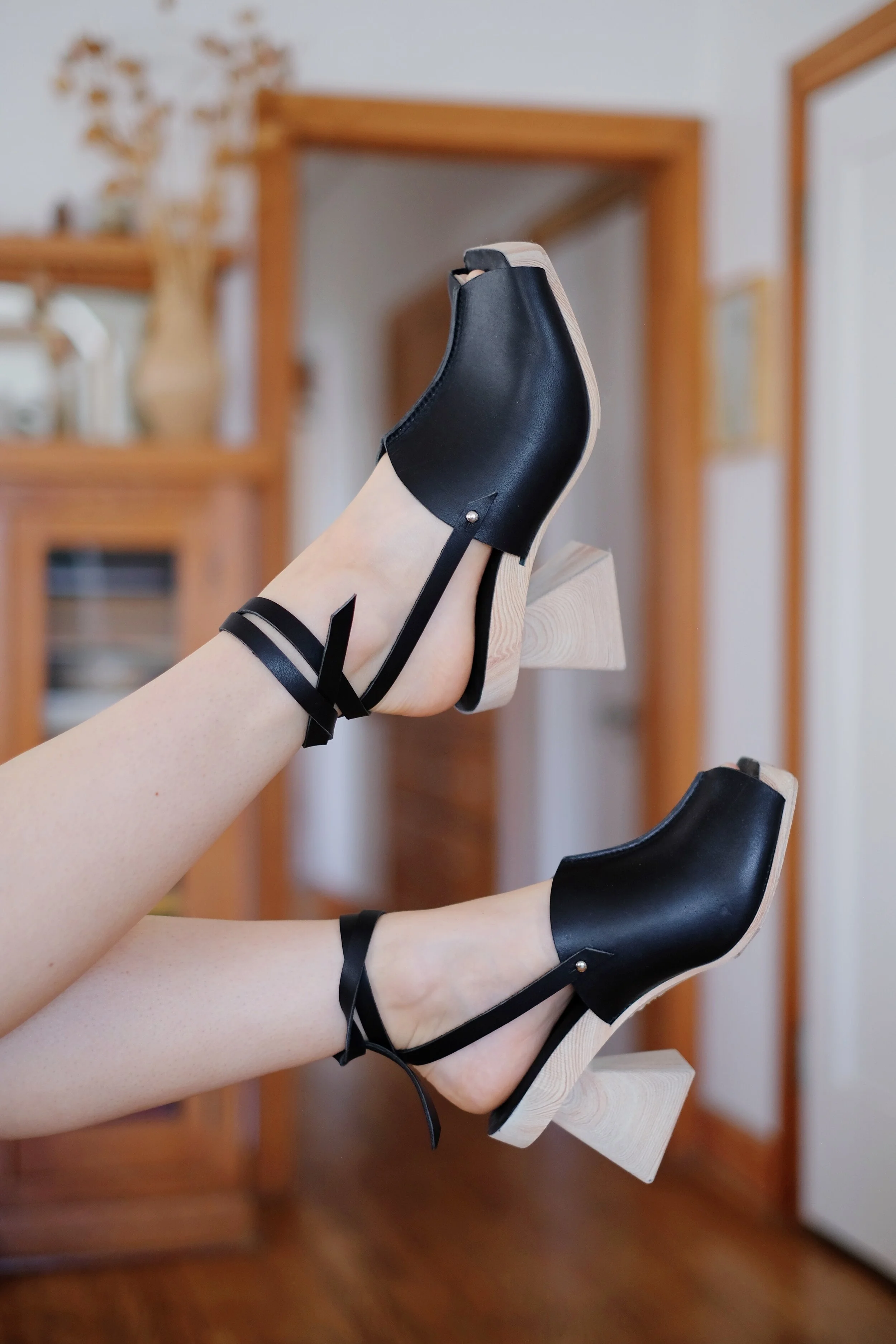
Hilos is a new company based out of the PNW that has put a lot of care and innovation into eliminating waste. Their shoes are made-to-order, so no extras will end up being sent to landfill. 20% of all shoes created are never sold… That’s a lot of waste. They’re also 100% recyclable. At the end of their life, Hilos takes back the shoes and offers a discount on your next pair. All of their materials are sustainably and ethically sourced.
Their shoes are 3D printed, so they can be tailored to your exact foot measurements. They also use the same materials as running shoes, so they’re unexpectedly comfortable for a heel.
W E L L N E S S
20% Off Discount Code: kristine20
Hilma was born from the need for natural alternatives to what lives in our medicine cabinet — those colorful, sugary syrups and pills. Most of the natural options out there aren’t backed by science or clinical trials, so Hilma decided to change all of that. After two years of research, assembling a world-class team of scientists, and after three clinical studies, they created a line of natural products that actually work. My favorites are the tension relief and upset stomach relief — I’ve been a regular iuboprofen user in the past and have wanted to kick that habit for my tension headaches. I’m so glad to have found this alternative.
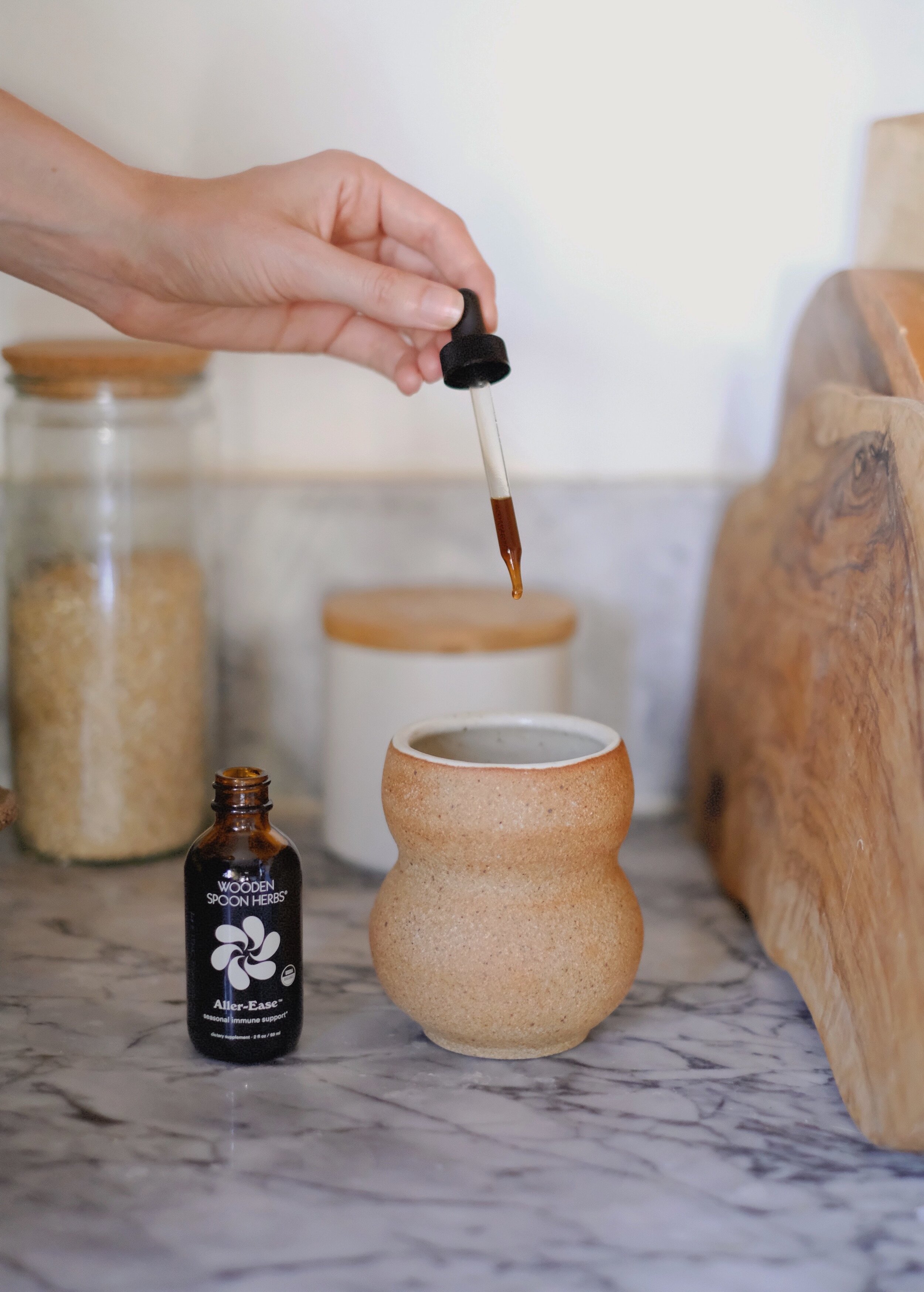
10% Off Discount Code: claggie10
Wooden Spoon Herbs is my go-to for tinctures, tonics, and they have some of my favorite loose leaf teas. If you’re into plant-based herbal elixirs, WSH will definitely have something for you. My favorite items so far are the Aller-Ease tincture, House Call Tea, and Solar Flare Tea. I’m looking forward to trying their herbal coffee next!

20% Off Discount Code: claggie20
CBD has been helping me get through the stress of 2020. I’ve tried both the tinctures and capsule versions of their CBD products and I love them both. They take the edge off of my anxiety and help me relax. They help with sleep as well! I even got a bottle of their CBD for pets because Hazel is a nervous pup around new people.
Chocolate Chip + Lemon Zest GF Scone Recipe
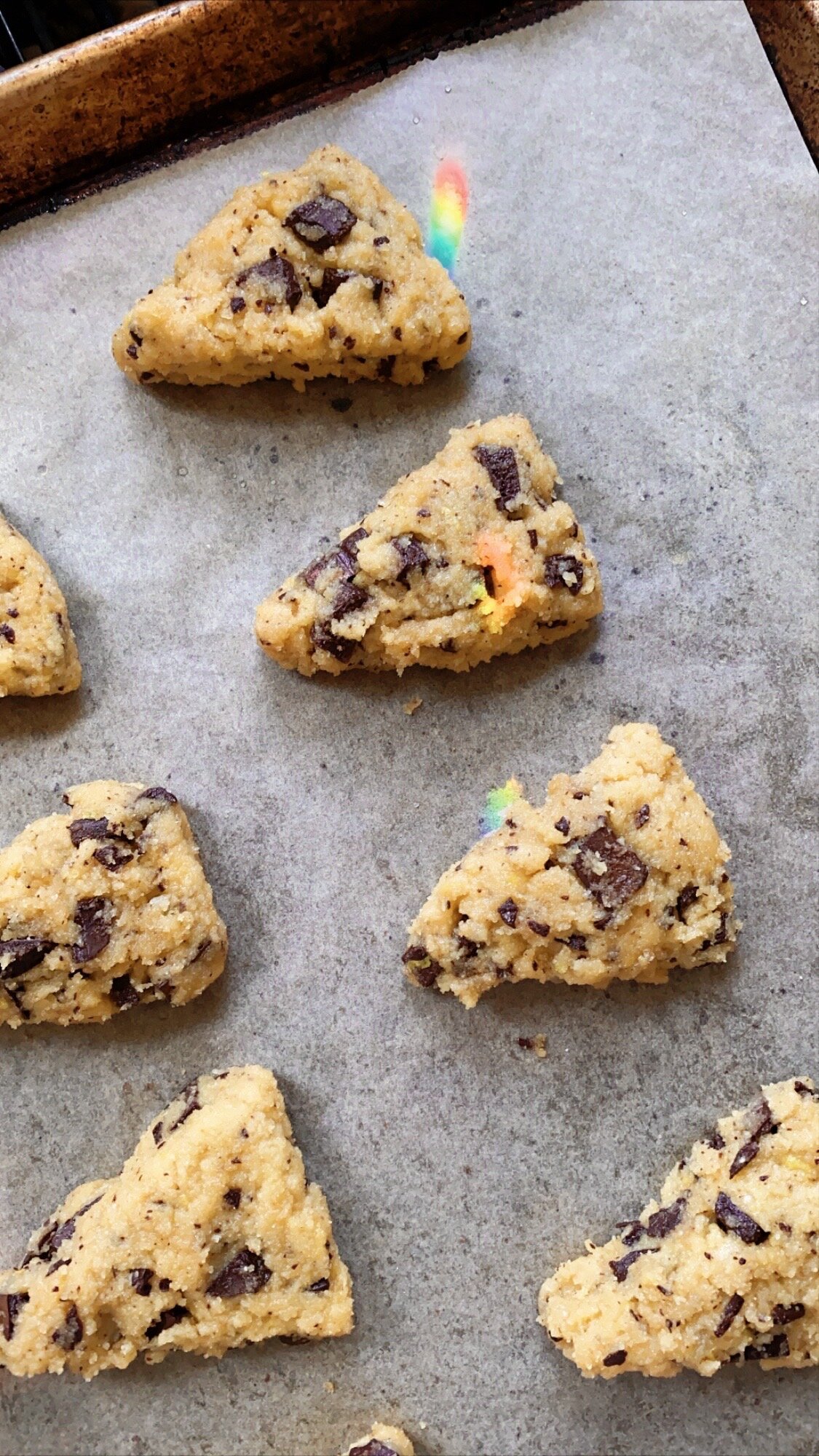
Ingredients
Dry
2 cups blanched almond flour
3/4 teaspoon baking soda
1/4 teaspoon sea salt
1/3 cup dark chocolate chunks or chips (I used 70% organic dark chocolate that we made in March with beans from the Dominican Republic)
Wet
1 large or 2 small eggs, lightly beaten
1/2 teaspoon vanilla extract
1-3 tablespoons of raw honey for sweetness (I used two)
Zest of one lemon
Instructions
Preheat oven to 350 degrees F.
In a large mixing bowl, mix the dry ingredients together.
In a small mixing bowl, mix the wet ingredients together.
Mix the wet ingredients into the dry ingredients using a large spoon, then mix with your hands to ensure the dough is uniform.
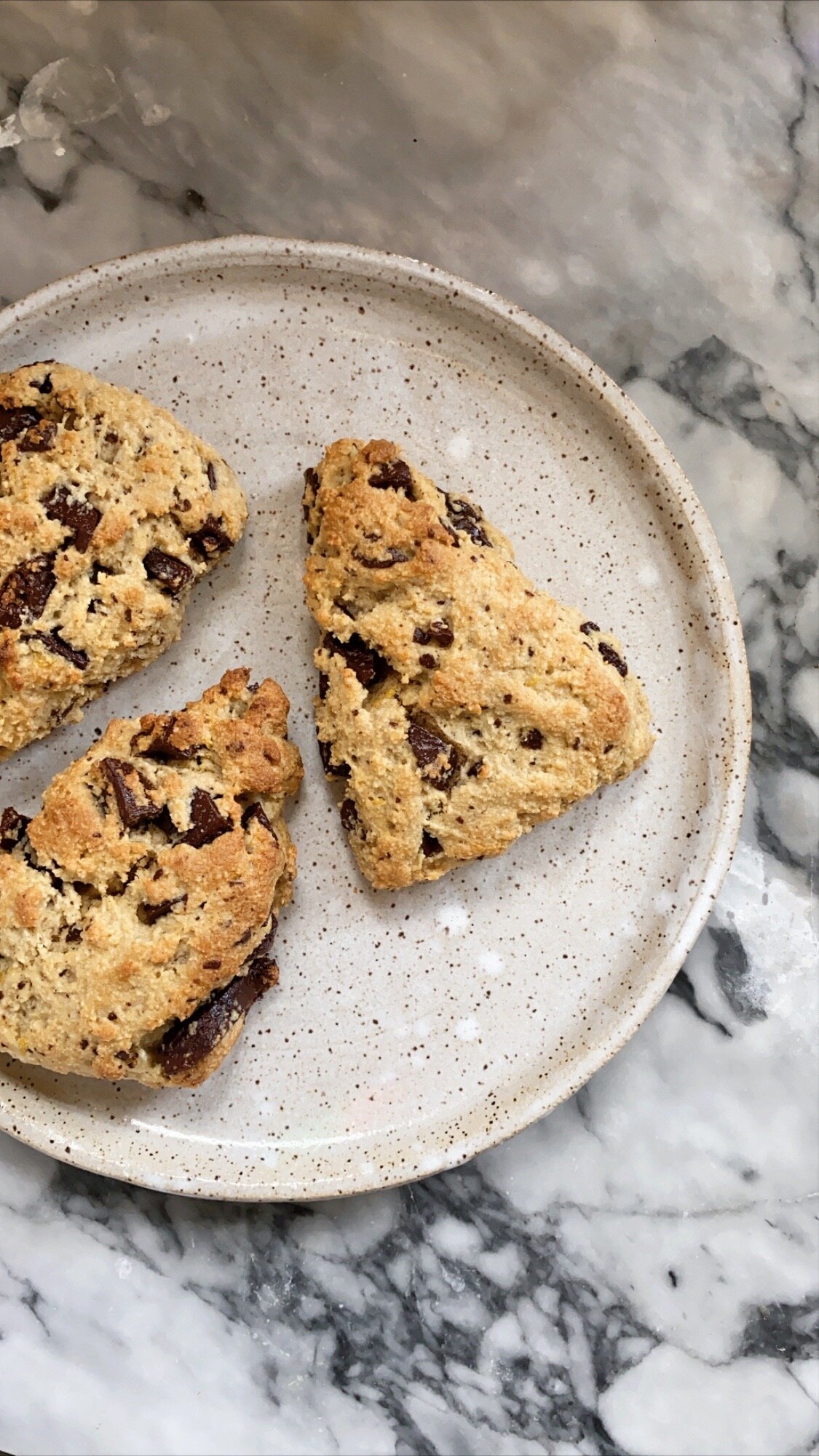
Form dough into a one-inch thick disk and cut into 8 equal pieces (similar to how you would cut a pizza).
Place the scones on a parchment paper-lined baking sheet and bake for ten minutes (or until lightly browned on the edges).
Let cool and serve!
What is Compost?

What is compost? Compost is decomposed organic material that can be added to soil to help plants grow. It includes food scraps, yard waste, and even shredded paper, cardboard and matches.
Why is it important to compost? Food scraps and yard waste make up ~30% of what we throw away and nearly half of the food in the US is thrown away.
When organic material is sent to the landfill, it decomposes anaerobically (without oxygen) because it’s buried deep below other garbage. This keeps it from decomposing at a natural rate.
Without the help of oxygen and pests, it releases an abundance of carbon dioxide and methane into the atmosphere.
Landfills are the third largest source of human-related methane emissions in the US — a lot of that coming from food waste. Methane is 28-30% more effective than CO2 at trapping heat in the atmosphere.

If you’re like me and don’t have a yard or garden where you can keep your compost, you can collect food scraps in your kitchen and do a few things with them:
Donate to a community garden in your area (a quick google search usually does the trick)
Check to see if your city offers curbside compost pick-up. Some have their own compost bins and some placed allow food scraps in the green yard waste bin (like LA).
Check your local farmers market once it’s safe. Many include community compost drop-off.
There’s also a really neat machine called the @foodcycler that I stumbled upon doing research that turns food scraps into soil inside the house. I’d love to try one of these out!

What can you put in your home compost?
Green items:
Fruit scraps
Vegetable scraps
Coffee grounds
Coffee filters (unbleached)
Egg shells (shell only)
Green leaves
Grass trimmings
Old Flowers
Brown items:
Mulch/wood chips
Dead leaves
Sawdust (from untreated wood)
Twigs (break into 2-3” pieces)
Newspaper
Shredded paper
Unbleached cardboard (torn into small pieces)
What NOT to put in home compost:
No meat
No dairy
No pet poops
No cat litter
No compostable plastic
No infested plants

Here’s a roundup of some countertop compost bins if you’re in the market! Ours is on the top left and it’s made from bamboo.
Wood Countertop Compost Bin (etsy)
Stainless Steel Compost Bin (william sonoma, amazon)
Oxo Compost Bin (sur la table, amazon)
Hammered Copper Compost Bin (gardener’s supply company)
Ceramic Compost Pail (pottery barn)
Foodcycler (no food waste)
Do you own a compost bin? I’d love to know what you have and how much you love it!
Book List
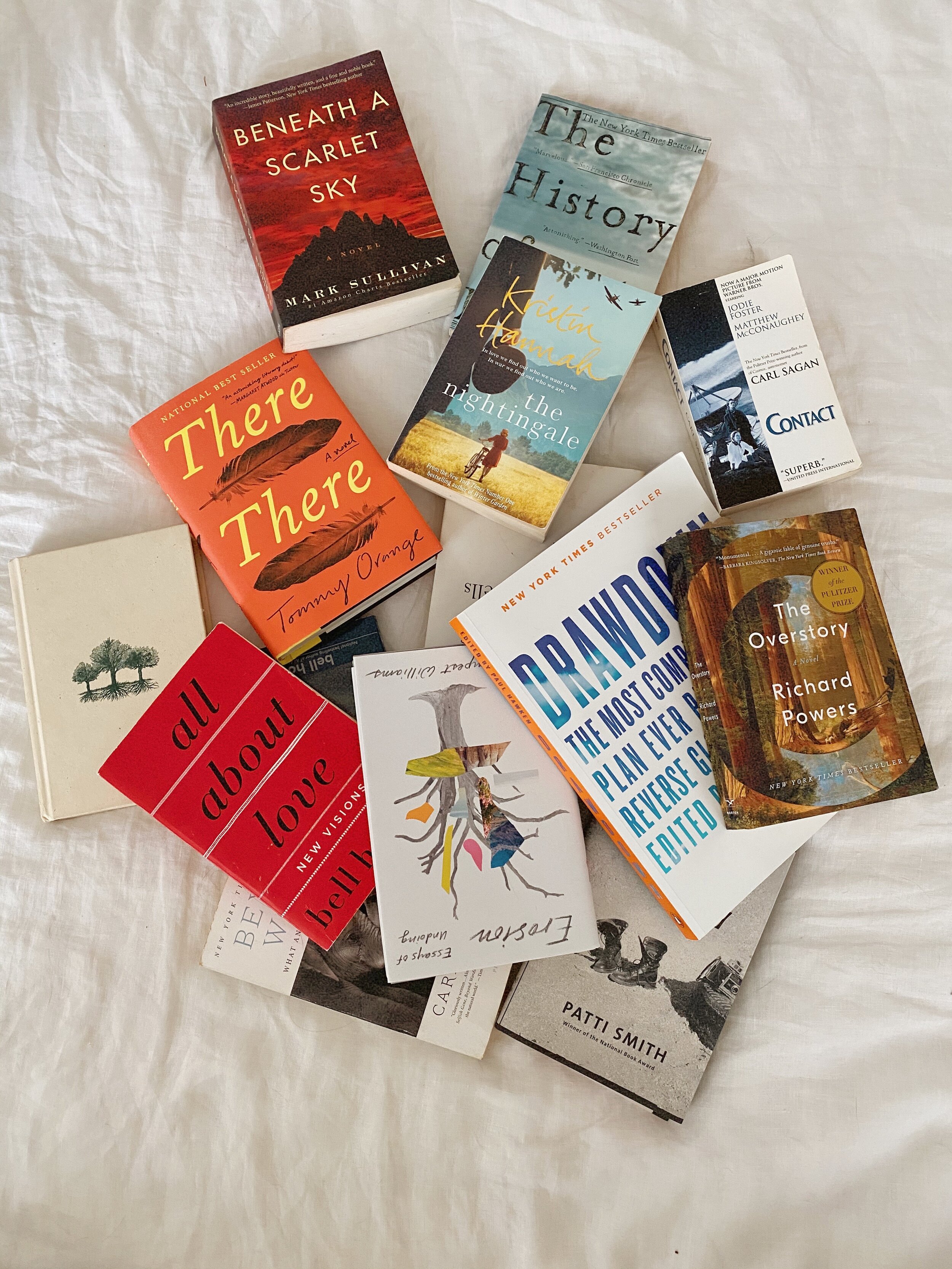
Sharing some of my favorite books below. I’ve added links to multiple places to shop, depending on your preference. Skylight Books is a local bookstore here in LA that’s offering free media mail shipping during this time, so consider them if you can!
All The Light We Cannot See
Skylight | Vromans | Barnes & Noble | Amazon
Overview: Marie-Laure lives in Paris near the Museum of Natural History, where her father works. When she is twelve, the Nazis occupy Paris and father and daughter flee to the walled citadel of Saint-Malo, where Marie-Laure’s reclusive great uncle lives in a tall house by the sea. With them they carry what might be the museum’s most valuable and dangerous jewel.
In a mining town in Germany, Werner Pfennig, an orphan, grows up with his younger sister, enchanted by a crude radio they find that brings them news and stories from places they have never seen or imagined. Werner becomes an expert at building and fixing these crucial new instruments and is enlisted to use his talent to track down the resistance. Deftly interweaving the lives of Marie-Laure and Werner, Doerr illuminates the ways, against all odds, people try to be good to one another.
All About Love
Skylight | Vromans | Barnes & Noble | Amazon
Overview: As bell hooks uses her incisive mind and razor-sharp pen to explore the question “What is love?” her answers strike at both the mind and heart. In thirteen concise chapters, hooks examines her own search for emotional connection and society’s failure to provide a model for learning to love. Razing the cultural paradigm that the ideal love is infused with sex and desire, she provides a new path to love that is sacred, redemptive, and healing for individuals and for a nation.
Belonging: A German Reckons with History and Home
Skylight | Vromans | Barnes & Noble | Amazon
Overview: Nora Krug was born decades after the fall of the Nazi regime, but the Second World War cast a long shadow over her childhood and youth in the city of Karlsruhe, Germany. Yet she knew little about her own family’s involvement; though all four grandparents lived through the war, they never spoke of it.
After twelve years in the US, Krug realizes that living abroad has only intensified her need to ask the questions she didn’t dare to as a child. Returning to Germany, she visits archives, conducts research, and interviews family members, uncovering in the process the stories of her maternal grandfather, a driving teacher in Karlsruhe during the war, and her father’s brother Franz-Karl, who died as a teenage SS soldier.
Beneath a Scarlet Sky
Skylight | Vromans | Barnes & Noble | Amazon
Overview: Pino Lella wants nothing to do with the war or the Nazis. He’s a normal Italian teenager—obsessed with music, food, and girls—but his days of innocence are numbered. When his family home in Milan is destroyed by Allied bombs, Pino joins an underground railroad helping Jews escape over the Alps, and falls for Anna, a beautiful widow six years his senior.
In an attempt to protect him, Pino’s parents force him to enlist as a German soldier—a move they think will keep him out of combat. But after Pino is injured, he is recruited at the tender age of eighteen to become the personal driver for Adolf Hitler’s left hand in Italy, General Hans Leyers, one of the Third Reich’s most mysterious and powerful commanders.
Now, with the opportunity to spy for the Allies inside the German High Command, Pino endures the horrors of the war and the Nazi occupation by fighting in secret, his courage bolstered by his love for Anna and for the life he dreams they will one day share.
Beyond Words: What Animals Think and Feel
Skylight | Vromans | Barnes & Noble | Amazon
Overview: Weaving decades of field observations with exciting new discoveries about the brain, Carl Safina's landmark book offers an intimate view of animal behavior to challenge the fixed boundary between humans and nonhuman animals. In Beyond Words, readers travel to Amboseli National Park in the threatened landscape of Kenya and witness struggling elephant families work out how to survive poaching and drought, then to Yellowstone National Park to observe wolves sort out the aftermath of one pack's personal tragedy, and finally plunge into the astonishingly peaceful society of killer whales living in the crystalline waters of the Pacific Northwest.
Beyond Words brings forth powerful and illuminating insight into the unique personalities of animals through extraordinary stories of animal joy, grief, jealousy, anger, and love. The similarity between human and nonhuman consciousness, self-awareness, and empathy calls us to re-evaluate how we interact with animals. Wise, passionate, and eye-opening at every turn, Beyond Words is ultimately a graceful examination of humanity's place in the world.
The Body Keeps the Score: Brain, Mind, and Body in the Healing of Trauma
Skylight | Vromans | Barnes & Noble | Amazon
Overview: Trauma is a fact of life. Veterans and their families deal with the painful aftermath of combat; one in five Americans has been molested; one in four grew up with alcoholics; one in three couples have engaged in physical violence. Dr. Bessel van der Kolk, one of the world’s foremost experts on trauma, has spent over three decades working with survivors. In The Body Keeps the Score, he uses recent scientific advances to show how trauma literally reshapes both body and brain, compromising sufferers’ capacities for pleasure, engagement, self-control, and trust. He explores innovative treatments—from neurofeedback and meditation to sports, drama, and yoga—that offer new paths to recovery by activating the brain’s natural neuroplasticity. Based on Dr. van der Kolk’s own research and that of other leading specialists, The Body Keeps the Score exposes the tremendous power of our relationships both to hurt and to heal—and offers new hope for reclaiming lives.
The Book Thief
Skylight | Vromans | Barnes & Noble | Amazon
Overview: When Death has a story to tell, you listen. It is 1939. Nazi Germany. The country is holding its breath. Death has never been busier, and will become busier still.
Liesel Meminger is a foster girl living outside of Munich, who scratches out a meager existence for herself by stealing when she encounters something she can’t resist–books. With the help of her accordion-playing foster father, she learns to read and shares her stolen books with her neighbors during bombing raids as well as with the Jewish man hidden in her basement.
The Boys in the Boat
Skylight | Vromans | Barnes & Noble | Amazon
Overview: It was an unlikely quest from the start. With a team composed of the sons of loggers, shipyard workers, and farmers, the University of Washington’s eight-oar crew team was never expected to defeat the elite teams of the East Coast and Great Britain, yet they did, going on to shock the world by defeating the German team rowing for Adolf Hitler. The emotional heart of the tale lies with Joe Rantz, a teenager without family or prospects, who rows not only to regain his shattered self-regard but also to find a real place for himself in the world. Drawing on the boys’ own journals and vivid memories of a once-in-a-lifetime shared dream, Brown has created an unforgettable portrait of an era, a celebration of a remarkable achievement, and a chronicle of one extraordinary young man’s personal quest.
Drawdown: The Most Comprehensive Plan Ever Proposed to Reduce Global Warming
Skylight | Vromans | Barnes & Noble | Amazon
Overview: In the face of widespread fear and apathy, an international coalition of researchers, professionals, and scientists have come together to offer a set of realistic and bold solutions to climate change. One hundred techniques and practices are described here—some are well known; some you may have never heard of. They range from clean energy to educating girls in lower-income countries to land use practices that pull carbon out of the air. The solutions exist, are economically viable, and communities throughout the world are currently enacting them with skill and determination. If deployed collectively on a global scale over the next thirty years, they represent a credible path forward, not just to slow the earth’s warming but to reach drawdown, that point in time when greenhouse gases in the atmosphere peak and begin to decline. These measures promise cascading benefits to human health, security, prosperity, and well-being—giving us every reason to see this planetary crisis as an opportunity to create a just and livable world.
Cosmos
Skylight | Vromans | Barnes & Noble | Amazon
Overview: Cosmos is one of the bestselling science books of all time. In clear-eyed prose, Sagan reveals a jewel-like blue world inhabited by a life form that is just beginning to discover its own identity and to venture into the vast ocean of space. Featuring a new Introduction by Sagan’s collaborator, Ann Druyan, full color illustrations, and a new Foreword by astrophysicist Neil deGrasse Tyson, Cosmos retraces the fourteen billion years of cosmic evolution that have transformed matter into consciousness, exploring such topics as the origin of life, the human brain, Egyptian hieroglyphics, spacecraft missions, the death of the Sun, the evolution of galaxies, and the forces and individuals who helped to shape modern science.
Educated
Skylight | Vromans | Barnes & Noble | Amazon
Overview: Born to survivalists in the mountains of Idaho, Tara Westover was seventeen the first time she set foot in a classroom. Her family was so isolated from mainstream society that there was no one to ensure the children received an education, and no one to intervene when one of Tara’s older brothers became violent. When another brother got himself into college, Tara decided to try a new kind of life. Her quest for knowledge transformed her, taking her over oceans and across continents, to Harvard and to Cambridge University. Only then would she wonder if she’d traveled too far, if there was still a way home.
Erosion: Essays of Undoing
Skylight | Vromans | Barnes & Noble | Amazon
Overview: Terry Tempest Williams's fierce, spirited, and magnificent essays are a howl in the desert. She sizes up the continuing assaults on America's public lands and the erosion of our commitment to the open space of democracy. She asks: "How do we find the strength to not look away from all that is breaking our hearts?"
We know the elements of erosion: wind, water, and time. They have shaped the spectacular physical landscape of our nation. Here, Williams bravely and brilliantly explores the many forms of erosion we face: of democracy, science, compassion, and trust. She examines the dire cultural and environmental implications of the gutting of Bear Ears National Monument—sacred lands to Native Peoples of the American Southwest; of the undermining of the Endangered Species Act; of the relentless press by the fossil fuel industry that has led to a panorama in which "oil rigs light up the horizon." And she testifies that the climate crisis is not an abstraction, offering as evidence the drought outside her door and, at times, within herself.
These essays are Williams's call to action, blazing a way forward through difficult and dispiriting times. We will find new territory—emotional, geographical, communal. The erosion of desert lands exposes the truth of change. What has been weathered, worn, and whittled away is as powerful as what remains. Our undoing is also our becoming.
Everything Is Illuminated
Skylight | Vromans | Barnes & Noble | Amazon
Overview: With only a yellowing photograph in hand, a young man — also named Jonathan Safran Foer — sets out to find the woman who might or might not have saved his grandfather from the Nazis. Accompanied by an old man haunted by memories of the war, an amorous dog named Sammy Davis, Junior, Junior, and the unforgettable Alex, a young Ukrainian translator who speaks in a sublimely butchered English, Jonathan is led on a quixotic journey over a devastated landscape and into an unexpected past.
As their adventure unfolds, Jonathan imagines the history of his grandfather’s village, conjuring a magical fable of startling symmetries that unite generations across time. As his search moves back in time, the fantastical history moves forward, until reality collides with fiction in a heart-stopping scene of extraordinary power.
Extremely Loud and Incredibly Close
Skylight | Vromans | Barnes & Noble | Amazon
Overview: Meet Oskar Schell, an inventor, Francophile, tambourine player, Shakespearean actor, jeweler, pacifist, correspondent with Stephen Hawking and Ringo Starr. He is nine years old. And he is on an urgent, secret search through the five boroughs of New York. His mission is to find the lock that fits a mysterious key belonging to his father, who died in the World Trade Center on 9/11.
An inspired innocent, Oskar is alternately endearing, exasperating, and hilarious as he careens from Central Park to Coney Island to Harlem on his search. Along the way he is always dreaming up inventions to keep those he loves safe from harm. What about a birdseed shirt to let you fly away? What if you could actually hear everyone's heartbeat? His goal is hopeful, but the past speaks a loud warning in stories of those who've lost loved ones before. As Oskar roams New York, he encounters a motley assortment of humanity who are all survivors in their own way. He befriends a 103-year-old war reporter, a tour guide who never leaves the Empire State Building, and lovers enraptured or scorned. Ultimately, Oskar ends his journey where it began, at his father's grave. But now he is accompanied by the silent stranger who has been renting the spare room of his grandmother's apartment. They are there to dig up his father's empty coffin.
The Giver
Skylight | Vromans | Barnes & Noble | Amazon
Overview: The Giver, the 1994 Newbery Medal winner, has become one of the most influential novels of our time. The haunting story centers on twelve-year-old Jonas, who lives in a seemingly ideal, if colorless, world of conformity and contentment. Not until he is given his life assignment as the Receiver of Memory does he begin to understand the dark, complex secrets behind his fragile community. Lois Lowry has written three companion novels to The Giver, including Gathering Blue, Messenger, and Son.
The Great Alone
Skylight | Vromans | Barnes & Noble | Amazon
Overview: Alaska, 1974. Ernt Allbright came home from the Vietnam War a changed and volatile man. When he loses yet another job, he makes the impulsive decision to move his wife and daughter north where they will live off the grid in America’s last true frontier.
Cora will do anything for the man she loves, even if means following him into the unknown. Thirteen-year-old Leni, caught in the riptide of her parents’ passionate, stormy relationship, has little choice but to go along, daring to hope this new land promises her family a better future.
In a wild, remote corner of Alaska, the Allbrights find a fiercely independent community of strong men and even stronger women. The long, sunlit days and the generosity of the locals make up for the newcomers’ lack of preparation and dwindling resources.
But as winter approaches and darkness descends, Ernt’s fragile mental state deteriorates. Soon the perils outside pale in comparison to threats from within. In their small cabin, covered in snow, blanketed in eighteen hours of night, Leni and her mother learn the terrible truth: they are on their own.
The Hidden Life of Trees
Skylight | Vromans | Barnes & Noble | Amazon
Overview: Are trees social beings? In this international bestseller, forester and author Peter Wohlleben convincingly makes the case that, yes, the forest is a social network. He draws on groundbreaking scientific discoveries to describe how trees are like human families: tree parents live together with their children, communicate with them, support them as they grow, share nutrients with those who are sick or struggling, and even warn each other of impending dangers. Wohlleben also shares his deep love of woods and forests, explaining the amazing processes of life, death, and regeneration he has observed in his woodland.
The History of Love
Skylight | Vromans | Barnes & Noble | Amazon
Overview: Leo Gursky taps his radiator each evening to let his upstairs neighbor know he’s still alive. But it wasn’t always like this: in the Polish village of his youth, he fell in love and wrote a book…Sixty years later and half a world away, fourteen-year-old Alma, who was named after a character in that book, undertakes an adventure to find her namesake and save her family.
How to Change Your Mind
Skylight | Vromans | Barnes & Noble | Amazon
Overview: When Michael Pollan set out to research how LSD and psilocybin (the active ingredient in magic mushrooms) are being used to provide relief to people suffering from difficult-to-treat conditions such as depression, addiction and anxiety, he did not intend to write what is undoubtedly his most personal book. But upon discovering how these remarkable substances are improving the lives not only of the mentally ill but also of healthy people coming to grips with the challenges of everyday life, he decided to explore the landscape of the mind in the first person as well as the third. Thus began a singular adventure into various altered states of consciousness, along with a dive deep into both the latest brain science and the thriving underground community of psychedelic therapists. Pollan sifts the historical record to separate the truth about these mysterious drugs from the myths that have surrounded them since the 1960s, when a handful of psychedelic evangelists inadvertently catalyzed a powerful backlash against what was then a promising field of research.
A unique and elegant blend of science, memoir, travel writing, history, and medicine, How to Change Your Mind is a triumph of participatory journalism. By turns dazzling and edifying, it is the gripping account of a journey to an exciting and unexpected new frontier in our understanding of the mind, the self, and our place in the world. The true subject of Pollan's "mental travelogue" is not just psychedelic drugs but also the eternal puzzle of human consciousness and how, in a world that offers us both suffering and joy, we can do our best to be fully present and find meaning in our lives.
Just Kids
Skylight | Vromans | Barnes & Noble | Amazon
Overview: Patti Smith would evolve as a poet and performer, and Robert Mapplethorpe would direct his highly provocative style toward photography. Bound in innocence and enthusiasm, they traversed the city from Coney Island to Forty-Second Street, and eventually to the celebrated round table of Max’s Kansas City, where the Andy Warhol contingent held court. In 1969, the pair set up camp at the Hotel Chelsea and soon entered a community of the famous and infamous, the influential artists of the day and the colorful fringe. It was a time of heightened awareness, when the worlds of poetry, rock and roll, art, and sexual politics were colliding and exploding. In this milieu, two kids made a pact to take care of each other. Scrappy, romantic, committed to create, and fueled by their mutual dreams and drives, they would prod and provide for one another during the hungry years.
Just Kids begins as a love story and ends as an elegy. It serves as a salute to New York City during the late sixties and seventies and to its rich and poor, its hustlers and hellions. A true fable, it is a portrait of two young artists’ ascent, a prelude to fame.
M Train
Skylight | Vromans | Barnes & Noble | Amazon
Overview: M Train begins in the tiny Greenwich Village café where Smith goes every morning for black coffee, ruminates on the world as it is and the world as it was, and writes in her notebook. Through prose that shifts fluidly between dreams and reality, past and present, we travel to Frida Kahlo’s Casa Azul in Mexico; to the fertile moon terrain of Iceland; to a ramshackle seaside bungalow in New York’s Far Rockaway that Smith acquires just before Hurricane Sandy hits; to the West 4th Street subway station, filled with the sounds of the Velvet Underground after the death of Lou Reed; and to the graves of Genet, Plath, Rimbaud, and Mishima.
Woven throughout are reflections on the writer’s craft and on artistic creation. Here, too, are singular memories of Smith’s life in Michigan and the irremediable loss of her husband, Fred Sonic Smith.
Braiding despair with hope and consolation, illustrated with her signature Polaroids, M Train is a meditation on travel, detective shows, literature, and coffee. It is a powerful, deeply moving book by one of the most remarkable multiplatform artists at work today.
Maus
Skylight | Vromans | Barnes & Noble | Amazon
Overview: A brutally moving work of art—widely hailed as the greatest graphic novel ever written—Maus recounts the chilling experiences of the author’s father during the Holocaust, with Jews drawn as wide-eyed mice and Nazis as menacing cats.
Maus is a haunting tale within a tale, weaving the author’s account of his tortured relationship with his aging father into an astonishing retelling of one of history's most unspeakable tragedies. It is an unforgettable story of survival and a disarming look at the legacy of trauma.
The Mental Load
Skylight | Vromans | Barnes & Noble | Amazon
Overview: In her first book of comic strips, Emma reflects on social and feminist issues by means of simple line drawings, dissecting the mental load, ie all that invisible and unpaid organizing, list-making and planning women do to manage their lives, and the lives of their family members. Most of us carry some form of mental load—about our work, household responsibilities, financial obligations and personal life; but what makes up that burden and how it's distributed within households and understood in offices is not always equal or fair. In her strips Emma deals with themes ranging from maternity leave (it is not a vacation!), domestic violence, the clitoris, the violence of the medical world on women during childbirth, and other feminist issues, and she does so in a straightforward way that is both hilarious and deadly serious.. If you're not laughing, you're probably crying in recognition. Emma's comics also address the everyday outrages and absurdities of immigrant rights, income equality, and police violence.
Emma has over 300,000 followers on Facebook, her comics have been. shared 215,000 times, and have elicited comments from 21,000 internet users. An article about her in the French magazine L'Express drew 1.8 million views—a record since the site was created. And her comic has just been picked up by The Guardian. Many women will recognize themselves in THE MENTAL LOAD, which is sure to stir a wide ranging, important debate on what it really means to be a woman today.
Night
Skylight | Vromans | Barnes & Noble | Amazon
Overview: Night is Elie Wiesel's masterpiece, a candid, horrific, and deeply poignant autobiographical account of his survival as a teenager in the Nazi death camps. This new translation by Marion Wiesel, Elie's wife and frequent translator, presents this seminal memoir in the language and spirit truest to the author's original intent. And in a substantive new preface, Elie reflects on the enduring importance of Night and his lifelong, passionate dedication to ensuring that the world never forgets man's capacity for inhumanity to man.
Night offers much more than a litany of the daily terrors, everyday perversions, and rampant sadism at Auschwitz and Buchenwald; it also eloquently addresses many of the philosophical as well as personal questions implicit in any serious consideration of what the Holocaust was, what it meant, and what its legacy is and will be.
The Nightingale
Skylight | Vromans | Barnes & Noble | Amazon
Overview: With courage, grace, and powerful insight, bestselling author Kristin Hannah captures the epic panorama of World War II and illuminates an intimate part of history seldom seen: the women's war. The Nightingale tells the stories of two sisters, separated by years and experience, by ideals, passion and circumstance, each embarking on her own dangerous path toward survival, love, and freedom in German-occupied, war-torn France—a heartbreakingly beautiful novel that celebrates the resilience of the human spirit and the durability of women. It is a novel for everyone, a novel for a lifetime.
The Overstory
Skylight | Vromans | Barnes & Noble | Amazon
Overview: The Overstory, winner of the 2019 Pulitzer Prize in Fiction, is a sweeping, impassioned work of activism and resistance that is also a stunning evocation of—and paean to—the natural world. From the roots to the crown and back to the seeds, Richard Powers’s twelfth novel unfolds in concentric rings of interlocking fables that range from antebellum New York to the late twentieth-century Timber Wars of the Pacific Northwest and beyond. There is a world alongside ours—vast, slow, interconnected, resourceful, magnificently inventive, and almost invisible to us. This is the story of a handful of people who learn how to see that world and who are drawn up into its unfolding catastrophe.
Pale Blue Dot
Skylight | Vromans | Barnes & Noble | Amazon
Overview: Future generations will look back on our epoch as the time when the human race finally broke into a radically new frontier—space. In Pale Blue Dot, Sagan traces the spellbinding history of our launch into the cosmos and assesses the future that looms before us as we move out into our own solar system and on to distant galaxies beyond. The exploration and eventual settlement of other worlds is neither a fantasy nor luxury, insists Sagan, but rather a necessary condition for the survival of the human race.
Sapiens
Skylight | Vromans | Barnes & Noble | Amazon
Overview: From a renowned historian comes a groundbreaking narrative of humanity’s creation and evolution—a #1 international bestseller—that explores the ways in which biology and history have defined us and enhanced our understanding of what it means to be “human.”
One hundred thousand years ago, at least six different species of humans inhabited Earth. Yet today there is only one—homo sapiens. What happened to the others? And what may happen to us?
Most books about the history of humanity pursue either a historical or a biological approach, but Dr. Yuval Noah Harari breaks the mold with this highly original book that begins about 70,000 years ago with the appearance of modern cognition. From examining the role evolving humans have played in the global ecosystem to charting the rise of empires, Sapiens integrates history and science to reconsider accepted narratives, connect past developments with contemporary concerns, and examine specific events within the context of larger ideas.
Dr. Harari also compels us to look ahead, because over the last few decades humans have begun to bend laws of natural selection that have governed life for the past four billion years. We are acquiring the ability to design not only the world around us, but also ourselves. Where is this leading us, and what do we want to become?
Slouching Towards Bethlehem
Skylight | Vromans | Barnes & Noble | Amazon
Overview: The first nonfiction work by one of the most distinctive prose stylists of our era, Joan Didion's Slouching Towards Bethlehem remains, decades after its first publication, the essential portrait of America—particularly California—in the sixties. It focuses on such subjects as John Wayne and Howard Hughes, growing up a girl in California, ruminating on the nature of good and evil in a Death Valley motel room, and, especially, the essence of San Francisco's Haight-Ashbury, the heart of the counterculture.
The Tattooist of Auschwitz
Skylight | Vromans | Barnes & Noble | Amazon
Overview: In April 1942, Lale Sokolov, a Slovakian Jew, is forcibly transported to the concentration camps at Auschwitz-Birkenau. When his captors discover that he speaks several languages, he is put to work as a Tätowierer (the German word for tattooist), tasked with permanently marking his fellow prisoners.
Imprisoned for over two and a half years, Lale witnesses horrific atrocities and barbarism—but also incredible acts of bravery and compassion. Risking his own life, he uses his privileged position to exchange jewels and money from murdered Jews for food to keep his fellow prisoners alive.
One day in July 1942, Lale, prisoner 32407, comforts a trembling young woman waiting in line to have the number 34902 tattooed onto her arm. Her name is Gita, and in that first encounter, Lale vows to somehow survive the camp and marry her.
A vivid, harrowing, and ultimately hopeful re-creation of Lale Sokolov's experiences as the man who tattooed the arms of thousands of prisoners with what would become one of the most potent symbols of the Holocaust, The Tattooist of Auschwitz is also a testament to the endurance of love and humanity under the darkest possible conditions.
There There
Skylight | Vromans | Barnes & Noble | Amazon
Overview: Tommy Orange’s wondrous and shattering novel follows twelve characters from Native communities: all traveling to the Big Oakland Powwow, all connected to one another in ways they may not yet realize. Among them is Jacquie Red Feather, newly sober and trying to make it back to the family she left behind. Dene Oxendene, pulling his life together after his uncle’s death and working at the powwow to honor his memory. Fourteen-year-old Orvil, coming to perform traditional dance for the very first time. Together, this chorus of voices tells of the plight of the urban Native American—grappling with a complex and painful history, with an inheritance of beauty and spirituality, with communion and sacrifice and heroism. Hailed as an instant classic, There There is at once poignant and unflinching, utterly contemporary and truly unforgettable.
The Will to Change
Skylight | Vromans | Barnes & Noble | Amazon
Overview: Everyone needs to love and be loved — even men. But to know love, men must be able to look at the ways that patriarchal culture keeps them from knowing themselves, from being in touch with their feelings, from loving. In The Will to Change, bell hooks gets to the heart of the matter and shows men how to express the emotions that are a fundamental part of who they are — whatever their age, marital status, ethnicity, or sexual orientation.
With trademark candor and fierce intelligence, hooks addresses the most common concerns of men, such as fear of intimacy and loss of their patriarchal place in society, in new and challenging ways. She believes men can find the way to spiritual unity by getting back in touch with the emotionally open part of themselves — and lay claim to the rich and rewarding inner lives that have historically been the exclusive province of women. A brave and astonishing work, The Will to Change is designed to help men reclaim the best part of themselves.
Woman World
Skylight | Vromans | Barnes & Noble | Amazon
Overview: When a birth defect wipes out the planet’s entire population of men, Woman World rises out of society’s ashes. Dhaliwal’s infectiously funny instagram comic follows the rebuilding process, tracking a group of women who have rallied together under the flag of “Beyonce’s Thighs.” Only Grandma remembers the distant past, a civilization of segway-riding mall cops, Blockbuster movie rental shops, and “That’s What She Said” jokes. For the most part, Woman World’s residents are focused on their struggles with unrequited love and anxiety, not to mention that whole “survival of humanity” thing.
Woman World is an uproarious and insightful graphic novel from a very talented and funny new voice.
COVID-19 Resources

C O V I D - 1 9 R E S O U R C E S
How to stay safe:
Wash your hands often and for at least 30 seconds each time. Here’s a video by the World Health Organization that shows the correct way to wash your hands.
Avoid touching your face (especially your eyes, nose and mouth).
Limit your travel.
Work from home or remotely, if you have the privilege to do so.
Do not attend public events. You may be young and healthy, but that is no reason to ignore the warnings. Until we know it’s safe, try to think of others who might not be so lucky.
Don’t panic. Stress reduces your immune system’s ability to ward off illness. Find ways to stay calm during the pandemic. Communicate with friends and family. Meditate. Take a bath. Read a book. I’ll list some helpful options below!
Make sure you have your prescriptions on hand. Try to avoid going to the pharmacy.
Exercise! This helps boost the immune system, as well as mental health.
Stay informed, but make sure you’re taking time to de-stress and help others as well. It’s also important not to read into misinformation.
Use a tissue to cover your nose and mouth when you sneeze/cough. If you don’t have a tissue, sneeze/cough into the crook of your elbow.
Avoid going to urgent care or the hospital if you can. If this pandemic reaches the projected numbers, there will not be enough room at hospitals for everyone. Stay home if you can.
How to help others:
Do not hoard supplies. There is a limited supply of essentials right now, so practice the art of sharing.
If you are healthy, do not buy face masks. There is a shortage of these and healthcare professionals need everything they can get.
Donate to your local food bank.
Donate blood if you are healthy. With the amount of intake hospitals will be dealing with in the coming weeks, there may be a shortage.
Check in with your neighbors, family members and friends. There are a lot of people out there that need to stay away from public places like grocery stores -- ask if you can pick something up for them. Ask how you can help those in your community that may not have the same privilege as you do. This Seattle Facebook page is a great example.
Stay up-to-date on apps like NextDoor to see how you can help your neighbors in need.
Contact your local homeless shelter and see what donations they’re in need of.
Ask your local politicians what they’re doing to help the homeless population during this time. There should be a moratorium on encampment sweeps that displace already displaced households and that often cause the loss of personal property that includes medication and other life-sustaining items. (source)
Support small businesses. Local businesses, restaurants, theaters, etc… are all struggling right now and will continue until this passes (which could be awhile). Consider buying a gift card to a business you know you’ll visit once this is all over. Order takeout from a local business that needs it, while they’re still open. If you’ve been thinking about purchasing something from a small business, this is the time to buy (as long as you have the means)!
A lot of people will not be paid during this time. Freelancers, people that are unable to extend their sick leave, etc… may not be able to make their rent or buy supplies that are needed to get buy. Ask how you can help and offer what you can.
Support healthcare workers, teachers, janitors, grocery store and Amazon workers (or anyone else that’s job requires them to be there, surrounded by crowds of people). Have a friend that’s a nurse? Ask them what they need. They may not be stressed yet, but it might get pretty bad for this in the coming weeks. Offer to grab them groceries or meals.
Symptoms of COVID-19/Coronavirus:
Fever
Dry cough
Fatigue
Shortness of breath
Less common: aches & pains, sore throat, runny or stuffy nose, diarrhea
Source: Worth Health Organization
What to have on hand, in case you come down with Covid-19/Coronavirus:
Kleenex
A thermometer
Acetaminophen (Tylenol) in 350mg tablets
Ibuprofen (Advil) in 200mg tablets
Mucinex
Robitussin or Dayquil/Nyquil (or whatever your choice of cough medicine is)
Humidifier (or take a steam in a hot shower)
If you have asthma, make sure that your prescription inhaler isn’t expired. And have a spare one on hand, if possible.
What to do if you suspect you have Covid-19/Coronavirus:
Stay home. Call your doctor or a healthcare professional to assess next steps. For most people, Covid-19 is minor. Do not put others at risk.
Seclude yourself from other people and animals in your home.
Cover your coughs and sneezes.
Wash your hands often.
Stay hydrated.
Get plenty of rest.
Monitor your symptoms and take your temperature multiple times a day.
If you have been in contact with others, let them know so that the can take extra precautions.
Suggestions for keeping your immune system as strong as possible:
Vitamin C (I use this lypo-spheric vitamin C)
Oregano Oil
Stay hydrated.
Rest as much as you need (more than normal).
Exercise/sweat regularly if you can.
Eat lots of fruits + vegetables.
Avoid sugar and alcohol if you need some immune help.
Practice activities that reduce your stress levels (meditation, taking a bath, taking a walk in nature, baking, communicating with loved ones, etc…)
Helpful Resources:
Why Outbreaks Like Coronavirus Spread Exponentially and How to Flatten the Curve by The Atlantic
The Case for Canceling Everything by The Atlantic
Coronavirus: Why You Must Act Now by Medium
Preparing for Coronavirus to Strike the U.S. by Scientific American
Want to do something about Coronavirus? Here are 5 ideas by Vox
The Coronavirus Pandemic: 5 Ways You Can Help Others by Harper’s Bazaar
Things to do when you’re stuck at home:
Give your home a deep clean.
Read the books you’ve been planning to read.
Try out some new meal or baked good recipes if you have the ingredients on hand (and share with your neighbors)!
Call your family + friends. You can also use FaceTime, House Party, Google Hang, Zoom or Skype to videochat with them.
Do a puzzle.
Catch up on documentaries, movies, tv shows, etc… that you’ve wanted to watch.
Exercise - find some at-home workouts to try out!
Go through your closets and do a little sale. Donate your earnings to organizations that need it if you’re able to!
Create a Netflix Party and watch something with friends!
Community
I thought it might be nice to create an online community during this time of social distancing. If you’d like to join, I created a slack for us to chat, share funny videos, ask questions, etc… If you’ve never used slack, it’s an app you can download to your phone and computer. Let me know if you have any questions about it!
Funny videos to take your mind off of everything:
Here’s a youtube playlist I made with some of my faves.
Sharing some of my favorite books and books on my to-read list (no need to order through these links -- you can most likely find these used or through your local bookstores that could definitely use the business right now):
The Body Keeps the Score: Brain, Mind, and Body in the Healing of Trauma
Climate Justice: Hope, Resilience, and the Fight for a Sustainable Future
Dear Ijeawele, or A Feminist Manifesto in Fifteen Suggestions
Drawdown: The Most Comprehensive Plan Ever Proposed to Reduce Global Warming
Fashionopolis: The Cost of Fast Fashion and the Future of Clothes
Inconspicuous Consumption: The Environmental Impact You Don’t Know You Have
The Water Will Come: Rising Seas, Sinking Cities, and the Remaking of a Civilized World
White Fragility: Why It’s So Hard for White People to Talk About Racism
What to watch:
Follow @remoteviewingcinema to watch films sourced by a film programmer here in LA. They’ll be sharing double features sourced from free or commonly subscribed to services like Kanopy, Amazon Prime, Netflix, Hulu, Tubi, Hoopla, Pluto, Youtube and Vudu. They’ll occasionally feature a “premium” double feature with titles from Criterion Collection or titles available for rent. Their hope is to build community around cinema while cinemas around the world are closed.
If you can watch for free, I’ll put the streaming service next to the items below:
13th
30 Rock (Hulu)
American Factory
Ask Dr. Ruth (Hulu)
Atypical (Netflix)
Booksmart
Broad City (Hulu)
Cheer (Netflix)
Couples Therapy (Showtime)
Dirty Money (Netflix)
The Farewell
Gilmore Girls (Netflix)
Honeyland
High Fidelity (Amazon)
High Maintenance (HBO)
The Keepers (Netflix)
Little America (Apple TV+)
The Marvelous Mrs. Maisel (Amazon)
Minding The Gap
Modern Love (Amazon)
The Morning Show (Apple TV+)
The Office (Netflix)
Parasite
Parks and Recreation (Netflix)
Pen15 (Hulu)
Schitt’s Creek (Netflix)
Seinfeld (Hulu)
Sex Education (Netflix)
Special (Netflix)
The Great British Baking Show (Netflix)
Visible: Out on Television (Apple TV+)
Links of people helping that you can take part in:
If you’re in Utah, this is a great resource for fostering dogs!
Skylight Books is offering free shipping on media mail, so order a book you’ve been wanting to read and support a small business!
Taylor Kitto is offering free meal plans and tips on how to make meals with what you have available. She’s a certified health coach!
This list is a work in progress. I’ll be continuing to add to it in the coming days/weeks/months.
*Note that I’m not a healthcare professional. I’m sharing research that I’ve found through the World Health Organization and other sources. If you find anything inaccurate, let me know! This is an open conversation and nothing is set in stone.
DIY: How To Remove Labels From Jars

I love to reuse glass jars all over the house. I use them in the pantry, the laundry room, and the bathroom… just to name a few. I love the way they look and it’s so much better than tossing them into the recycling bin. Glass can be infinitely recycled (which is great), but it does require a lot of energy to turn it into something new. The best thing you can do is reuse for yourself!
The only thing that can be a bit of a hassle is trying to remove labels and sticky residue from jars once they’re empty. Here’s what I recommend:
Soak jars in hot water for 30 minutes to an hour. I usually add in a dash of castile soap.
Remove from water and peel off the label as best as you can. There will probably be a good amount of residue left over underneath.
Create a paste using olive oil, baking soda, and lemon essential oil. Rub this on the residue that remains on the jar.
Let sit for 30 minutes to an hour.
After that, rinse off the paste and the residue should glide right off of the jar!
If there’s a bit of clumsy residue that doesn’t want to come off, I dab on a tad more lemon essential oil and use a scrubber on it. That usually does the trick!
Let me know if you try this out and I hope it works well for you. If you have any other tips/tricks, let me know! I’d love to hear.

Homemade Vegetable Broth Using Veggie Scraps

How to make your own vegetable broth using food scraps:
Save vegetable scraps by keeping them in a container in the freezer.
Get out your crockpot, instant pot, or large pot for the stove top.
The best veggies to use as a base are onions, carrots and celery. I also add in garlic. Add a little olive oil to the bottom of the pot and put these in. Let them simmer for a bit until they start to golden.
Next, add in your frozen vegetable scraps. I use about three cups. My recommendation is to not use too many cruciferous veggies (cabbage, broccoli, kale, brussel sprouts) because they can make the broth taste really bitter. I’ll add in some because I don’t mind a little bitter flavor, just make sure to balance it out. if you aren’t a fan of bitter flavors, I recommend omitting these veggies.
Fill with ~8 cups of water (you can adjust if you have less scraps to work with or a smaller pot).
You can add anywhere from 2-10 bay leaves depending on how you like the taste and the amount you’re making. I tend to put more in because I love the light/fresh taste.
Simmer on a low setting for 45 minutes to an hour. Season with salt and pepper.
Let the broth cool down a bit, then pour it through a strainer to catch the vegetables scraps. I usually pour the broth through a strainer, directly into a large jar.
Fill a jar or container up bout 2/3, close tight and place in the freezer. The 2/3 rule is to give room since it’ll expand as it freezes.
When you’re ready to use, thaw and throw it back it a pot to heat it up!

Massage Oil DIY

What you’ll need:
A carrier oil like fractionated coconut oil, almond oil, or grapeseed oil (this one is messiest)
Essential oils that you enjoy (I did a blend of ylang ylang, vetiver, and cedarwood)
Here’s what I added to mine:
3 drops ylang ylang (this essential oil is a bit strong for me, so I only add a little. I saw some other recipes where people added 10-20 drops. so if you like it strong, you can add more).
6 drops vetiver
6 drops cedarwood
Fill up the bottle with the carrier oil of your choice. I used fractionated coconut oil because it’s odorless and I like the feel of it.
Shake it up and massage away!
Zero Waste Dryer Sheets DYI

Dryer sheets and fabric softeners are full of chemicals (and can actually damage clothing, depending on the fabric). Did you know that vinegar acts as a natural fabric softener without leaving any chemicals + residue on your clothing?
I’ve taken some old unpaper towels that were at the end of their life and cut them up to make my own natural + sustainable dryer sheets. Here’s how to do it!
What you need:
-any old rags or fabric you have laying around
-white vinegar
-essential oils of your choice OR white vinegar that has been diffused with natural scents.
How to do it:
1. Put your old rags and fabric in a jar.
2. Mix about 10-15 drops of the essential oil you’d like to use with about a cup of vinegar. You can also diffuse the vinegar ahead of time with discarded citrus peels, rosemary, lavender, or pine needs leftover from your Christmas tree (that’s what I did here).
3. Pour the scented vinegar over the rags in the jar until they’re moistened, but not totally soaking in liquid.
4. Use one of the cloths per load of laundry.
5. You can throw the rags into the wash once they’ve been used and re-soak them to keep using again and again.
Sustainable Valentine's Day

According to the NRF, the top three gifts people will buy for Valentine’s Day are chocolates, jewelry and flowers.
Unfortunately, much of the options you see at the bigger stores nearby are not the most sustainable. Boxes of chocolate often come in mixed material packaging that can’t be recycled, a lot of jewelry is not sustainably or ethically made and flowers (especially roses) can be shipped across the world just for the holiday.
Above, you’ll find some sustainable options that would make great gifts for loved ones, friends, or for yourself (everyone celebrated Valentine’s Day differently)!
Say When Wine, a small sustainable wine label by Rachel and Michel, a couple based here California.
Flowers by Fibers & Florals, a sustainable florist here in east LA.
My personal favorite small batch chocolate, Dandelion. Their packaging is plastic-free and recyclable.
My favorite vintage jewelry brand, Danica Stamenic.
Sustainable lingerie brand Botanica Workshop. Here are some other great options as well: Arq, Knickey, Hara the Label, Wear Proclaim, Jonesy, and Pansy Co.
A relaxing, detoxing face mask by Lesse.
All About Love by Bell Hooks.
“All About Love offers radical new ways to think about love by showing its interconnectedness in our private and public lives. In eleven concise chapters, hooks explains how our everyday notions of what it means to give and receive love often fail us, and how these ideals are established in early childhood. She offers a rethinking of self-love (without narcissism) that will bring peace and compassion to our personal and professional lives, and asserts the place of love to end struggles between individuals, in communities, and among societies. Moving from the cultural to the intimate, hooks notes the ties between love and loss and challenges the prevailing notion that romantic love is the most important love of all.”
Jojoba oil-based massage candle by Maude.
Nourishing & Calming bath drops by Fur.
Handmade ceramic capsule by bX Ceramics.
Masha Love Tea (organic skullcap, organic roses, organic fennel, wild harvested western red cedar).

Around a billion valentines are sent each year globally, making Valentine’s Day the second largest card-sending holiday of the year behind Christmas.
If you're planning on purchasing a card this year, look for FSC-certified paper or make your own with what you have at home!

If you’re going to buy flowers, try to find local flowers instead of roses. About 100 million roses are grown annually for Valentine’s Day in the US. This produces ~9,000 metric tons of carbon dioxide emissions.
On top of that, roses are generally grown in warmer climates (such as South America), so they have to be flown all over the world to reach the shops nearby. On top of that, roses have to be stored in the cold, so they are refrigerated from the moment they are picked until you buy them.

I wanted to share some sustainable ideas for those of you that like to do something special on Valentine’s Day, whether it be for your partner, a friend or yourself.
Run them a bath. Light a candle and pour in some relaxing epsom salts.
Make a meal or take a cooking class together. Restaurants are often super hectic (although there’s nothing wrong with visiting your favorite spot). Pour a glass of wine and spend some time one-on-one making something delicious.
If you’re going to buy flowers, buy them locally. Another great idea is to buy a potted plant that you can keep for more than just a few days.
Breakfast in bed — Make them their favorite breakfast and pair it with coffee or tea.
Go on a mini road trip together. You can even play tourist in your own town and find something you’ve never done before, or go on a hike!
Instead of going out and buying a card, make something at home with what you already have.
Climate Apartheid

The richest 10% of people in the world produce 50% of Earth’s fossil fuel emissions, while the poorest half of the world contributes a mere 10%.
An average person among the richest one percent emits 175 times more carbon than his or her counterpart among the bottom 10%. (The Guardian)

A report submitted to the U.N. in June of 2019 warned that human rights (along with many of the world’s poorest residents) may not survive the ongoing climate crisis.
The climate apartheid scenario we risk allows the wealthiest to pay to escape the disasters caused by climate change — wildfires, floods, droughts, overheating, hunger and conflict to name a few. The rest of the world will be left to suffer, unable to pay their way out of the situation.
According to U.N. reporter, Philip Alston, the world’s poorest populations will continue to lose access to water and food as migrant populations increase. Developing countries will bear 75% of the costs of climate crisis despite causing only a small fraction of the carbon emissions that cause the disasters.
Even if the current targets of the Paris Agreement are met, tens of millions of people will be pushed into poverty, displacement and hunger shortages. (UN)

The International Displacement Monitoring Center recorded that 17.2 million people were displaced due to disasters in 2018 alone.
The first six months of 2019 have seen seven million displaced, the highest midyear figure ever reported for displacements associated with disasters. (Extinction Rebellion)

On top of all of this, a 2018 report by the EPA found that people of color are much more likely to live near polluters and breathe polluted air.
The study finds that black people are exposed to about 1.5 times more particulate matter than white people, and that Hispanics had about 1.2 times the exposure of non-Hispanic whites. The study found that people in poverty had about 1.3 times more exposure than people above poverty. (The Atlantic)

These two articles include some wonderful activists of color:
9 Activists of Color Your Should Know by Teen Vogue
Meet the Young Activists of Color who Are Leading the Charge Against Climate Disaster by Vox

Clean Beauty Routine

As I run out of old beauty products, I’ve been trying to switch to more clean + sustainable brands. There’s a long way to go in the beauty industry when it comes to plastic packaging and waste, so I’m trying not to be too hard on myself for not getting it perfect. If you have any advice for brands to try in the future that may be better, let me know! I’m not attached to my current routine.

Here’s what I’m currently wearing:
Brows: Alima Pure Natural Definition Brow Pencil in Brunette
Lashes: Refillable Lush Up Volumizing Mascara (the refillable part is plastic, so that’s a bummer)
Liner: W3ll People Expressionist Liquid Liner
Cheeks: Noto Botanics Hydra Highlighter
I'll Have My Tea Without a Side of Microplastics, Please.
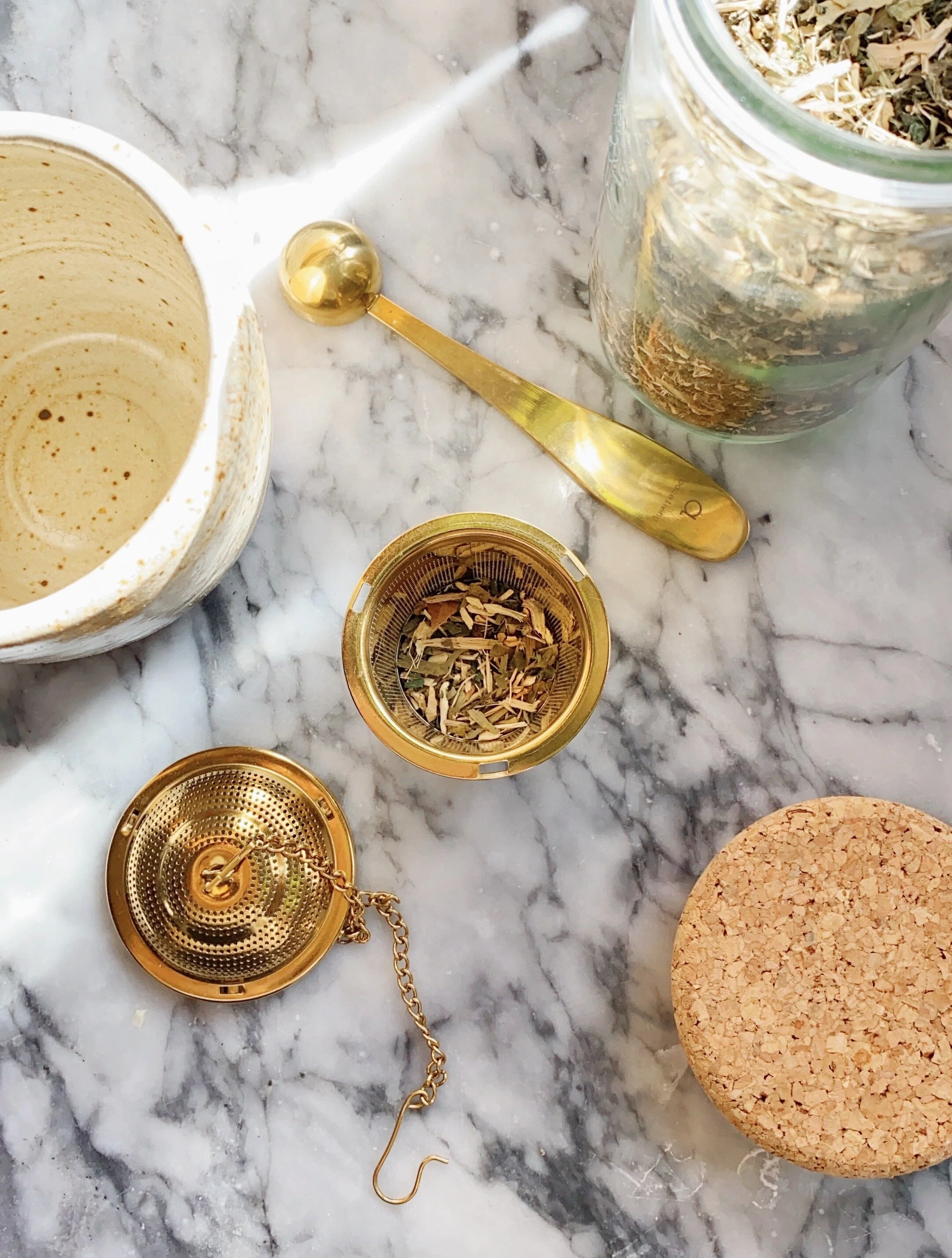
A study found that 11.6 billion microplastic particles are released when one tea bag is steeped in water (and on top of that, 3.1 billion even smaller nano plastic particles are released into the cup). That’s thousands of times higher than the amount of plastic previous found in other food + drink items. (cnn)
Even a lot of premium teas that use all natural fibers in their teabags often use polypropylene to seal the bags.
There currently aren’t any in-depth studies that show how the consumption of microplastics affect our health, so I’m going to play it on the safe side and try to consume the smallest amount I can… at least when I drink tea.
I’ve been using a stainless steel tea strainer that my mom gave me and it’s kind of like putting a little spaceship in your mug. I love it. I’ve dropped some of my favorites below:

Botra Teapot | Gold Stainless Steel Tea Egg | Brass Stem Tea Strainer ( I like to call this one the Golden Snitch) | Wooden Tea Press | Solid Brass Tea Strainer (reminds me of Flight of the Navigator for some reason)
The one in the top photo is one that was given to me by my mom for Christmas. Linking it here.
Do you have one that you use and love? I’d love to add more to my list of tea strainers! Most of the ones I picked look like they’re from an alien world or straight out of Harry Potter, which I am more than OK with.