
I'll Have My Tea Without a Side of Microplastics, Please.
A study found that 11.6 billion microplastic particles are released when one tea bag is steeped in water (and on top of that, 3.1 billion even smaller nano plastic particles are released into the cup). That’s thousands of times higher than the amount of plastic previous found in other food + drink items. (cnn)
Even a lot of premium teas that use all natural fibers in their teabags often use polypropylene to seal the bags.
There currently aren’t any in-depth studies that show how the consumption of microplastics affect our health, so I’m going to play it on the safe side and try to consume the smallest amount I can… at least when I drink tea.
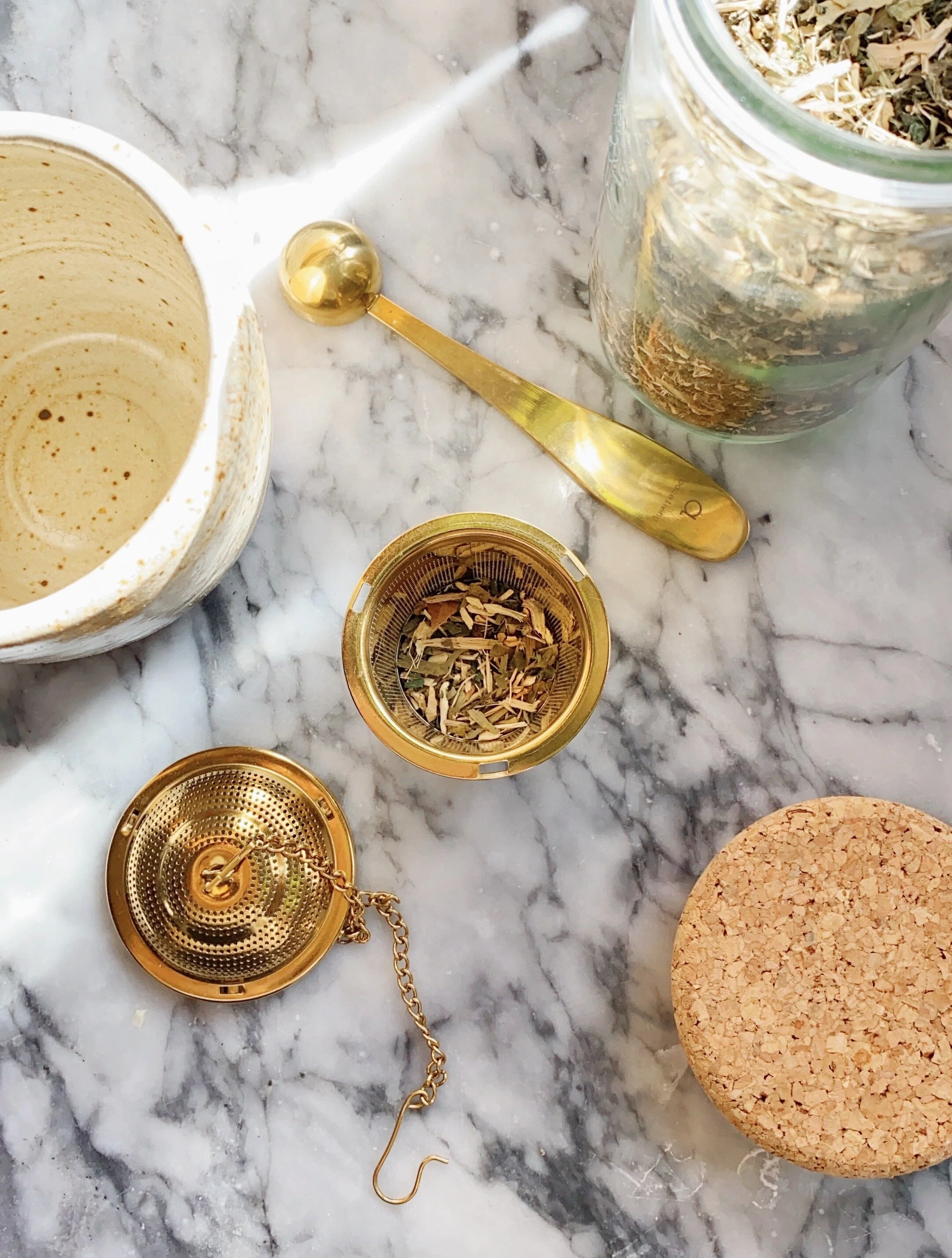
I’ve been using a stainless steel tea strainer that my mom gave me and it’s kind of like putting a little spaceship in your mug. I love it. I’ve dropped some of my favorites below:

Botra Teapot | Gold Stainless Steel Tea Egg | Brass Stem Tea Strainer ( I like to call this one the Golden Snitch) | Wooden Tea Press | Solid Brass Tea Strainer (reminds me of Flight of the Navigator for some reason)
The one in the top photo is one that was given to me by my mom for Christmas. Linking it here.
Do you have one that you use and love? I’d love to add more to my list of tea strainers! Most of the ones I picked look like they’re from an alien world or straight out of Harry Potter, which I am more than OK with.
Environmentally Friendly Christmas Tree
Getting into the holiday spirit and doing a bit of research: What are the most sustainable options for Christmas trees? I’ll share what I found.

First off, if you’re looking to purchase a tree this year, buying a real tree is much better for the environment than a plastic one (unless you already have a plastic tree at home you can use).
Benefits of purchasing a real tree > a plastic one:
One acre of fir trees can consume 12,000lbs of carbon dioxide from the atmosphere.
Buying from a local farm helps support the economy (and small business owners, yay)!
Christmas trees are grown like a crop, not usually in a forest setting. For every tree cut down, 1-5 are planted in its place. This is great for capturing CO2!
Real Christmas trees can be composted.
If you already have a plastic tree, you’re better off using that than switching over to a real tree. If you can’t buy a real tree for any reason (ex. allergies), try to find a plastic one secondhand. Take care of it and use it for as long as you can.
According to the Carbon Trust, you need to reuse an artificial tree for at least 10 years to keep its environmental impact lower than that of one real tree being grown and transported.
Another great option is to buy a potted Christmas tree. This way, you can use it for years to come… or plant it in your yard! In California, there’s a company called Living Christmas Tree that will allow you to rent a living tree for the season!
Finally, you avoid purchasing a Christmas tree all together. There are a lot of ways to get creative, while still making your home feel festive for the holidays.
Use a rosemary bush as a miniature Christmas tree this year. It’ll give you the endless gift of fresh rosemary and will smell great.
Craft up something with items around the house. Use spare wood, paper, cardboard, etc… and create something to showcase in your house.
Use a plant you already have on hand. A Christmas cactus is never a bad idea.
Do you have other sustainable plans for the holidays? I’d love to hear from you. Happy Holidays!