
What is Compost?

What is compost? Compost is decomposed organic material that can be added to soil to help plants grow. It includes food scraps, yard waste, and even shredded paper, cardboard and matches.
Why is it important to compost? Food scraps and yard waste make up ~30% of what we throw away and nearly half of the food in the US is thrown away.
When organic material is sent to the landfill, it decomposes anaerobically (without oxygen) because it’s buried deep below other garbage. This keeps it from decomposing at a natural rate.
Without the help of oxygen and pests, it releases an abundance of carbon dioxide and methane into the atmosphere.
Landfills are the third largest source of human-related methane emissions in the US — a lot of that coming from food waste. Methane is 28-30% more effective than CO2 at trapping heat in the atmosphere.

If you’re like me and don’t have a yard or garden where you can keep your compost, you can collect food scraps in your kitchen and do a few things with them:
Donate to a community garden in your area (a quick google search usually does the trick)
Check to see if your city offers curbside compost pick-up. Some have their own compost bins and some placed allow food scraps in the green yard waste bin (like LA).
Check your local farmers market once it’s safe. Many include community compost drop-off.
There’s also a really neat machine called the @foodcycler that I stumbled upon doing research that turns food scraps into soil inside the house. I’d love to try one of these out!

What can you put in your home compost?
Green items:
Fruit scraps
Vegetable scraps
Coffee grounds
Coffee filters (unbleached)
Egg shells (shell only)
Green leaves
Grass trimmings
Old Flowers
Brown items:
Mulch/wood chips
Dead leaves
Sawdust (from untreated wood)
Twigs (break into 2-3” pieces)
Newspaper
Shredded paper
Unbleached cardboard (torn into small pieces)
What NOT to put in home compost:
No meat
No dairy
No pet poops
No cat litter
No compostable plastic
No infested plants

Here’s a roundup of some countertop compost bins if you’re in the market! Ours is on the top left and it’s made from bamboo.
Wood Countertop Compost Bin (etsy)
Stainless Steel Compost Bin (william sonoma, amazon)
Oxo Compost Bin (sur la table, amazon)
Hammered Copper Compost Bin (gardener’s supply company)
Ceramic Compost Pail (pottery barn)
Foodcycler (no food waste)
Do you own a compost bin? I’d love to know what you have and how much you love it!
Zero Waste Dryer Sheets DYI

Dryer sheets and fabric softeners are full of chemicals (and can actually damage clothing, depending on the fabric). Did you know that vinegar acts as a natural fabric softener without leaving any chemicals + residue on your clothing?
I’ve taken some old unpaper towels that were at the end of their life and cut them up to make my own natural + sustainable dryer sheets. Here’s how to do it!
What you need:
-any old rags or fabric you have laying around
-white vinegar
-essential oils of your choice OR white vinegar that has been diffused with natural scents.
How to do it:
1. Put your old rags and fabric in a jar.
2. Mix about 10-15 drops of the essential oil you’d like to use with about a cup of vinegar. You can also diffuse the vinegar ahead of time with discarded citrus peels, rosemary, lavender, or pine needs leftover from your Christmas tree (that’s what I did here).
3. Pour the scented vinegar over the rags in the jar until they’re moistened, but not totally soaking in liquid.
4. Use one of the cloths per load of laundry.
5. You can throw the rags into the wash once they’ve been used and re-soak them to keep using again and again.
Climate Apartheid

The richest 10% of people in the world produce 50% of Earth’s fossil fuel emissions, while the poorest half of the world contributes a mere 10%.
An average person among the richest one percent emits 175 times more carbon than his or her counterpart among the bottom 10%. (The Guardian)

A report submitted to the U.N. in June of 2019 warned that human rights (along with many of the world’s poorest residents) may not survive the ongoing climate crisis.
The climate apartheid scenario we risk allows the wealthiest to pay to escape the disasters caused by climate change — wildfires, floods, droughts, overheating, hunger and conflict to name a few. The rest of the world will be left to suffer, unable to pay their way out of the situation.
According to U.N. reporter, Philip Alston, the world’s poorest populations will continue to lose access to water and food as migrant populations increase. Developing countries will bear 75% of the costs of climate crisis despite causing only a small fraction of the carbon emissions that cause the disasters.
Even if the current targets of the Paris Agreement are met, tens of millions of people will be pushed into poverty, displacement and hunger shortages. (UN)

The International Displacement Monitoring Center recorded that 17.2 million people were displaced due to disasters in 2018 alone.
The first six months of 2019 have seen seven million displaced, the highest midyear figure ever reported for displacements associated with disasters. (Extinction Rebellion)

On top of all of this, a 2018 report by the EPA found that people of color are much more likely to live near polluters and breathe polluted air.
The study finds that black people are exposed to about 1.5 times more particulate matter than white people, and that Hispanics had about 1.2 times the exposure of non-Hispanic whites. The study found that people in poverty had about 1.3 times more exposure than people above poverty. (The Atlantic)

These two articles include some wonderful activists of color:
9 Activists of Color Your Should Know by Teen Vogue
Meet the Young Activists of Color who Are Leading the Charge Against Climate Disaster by Vox

I'll Have My Tea Without a Side of Microplastics, Please.
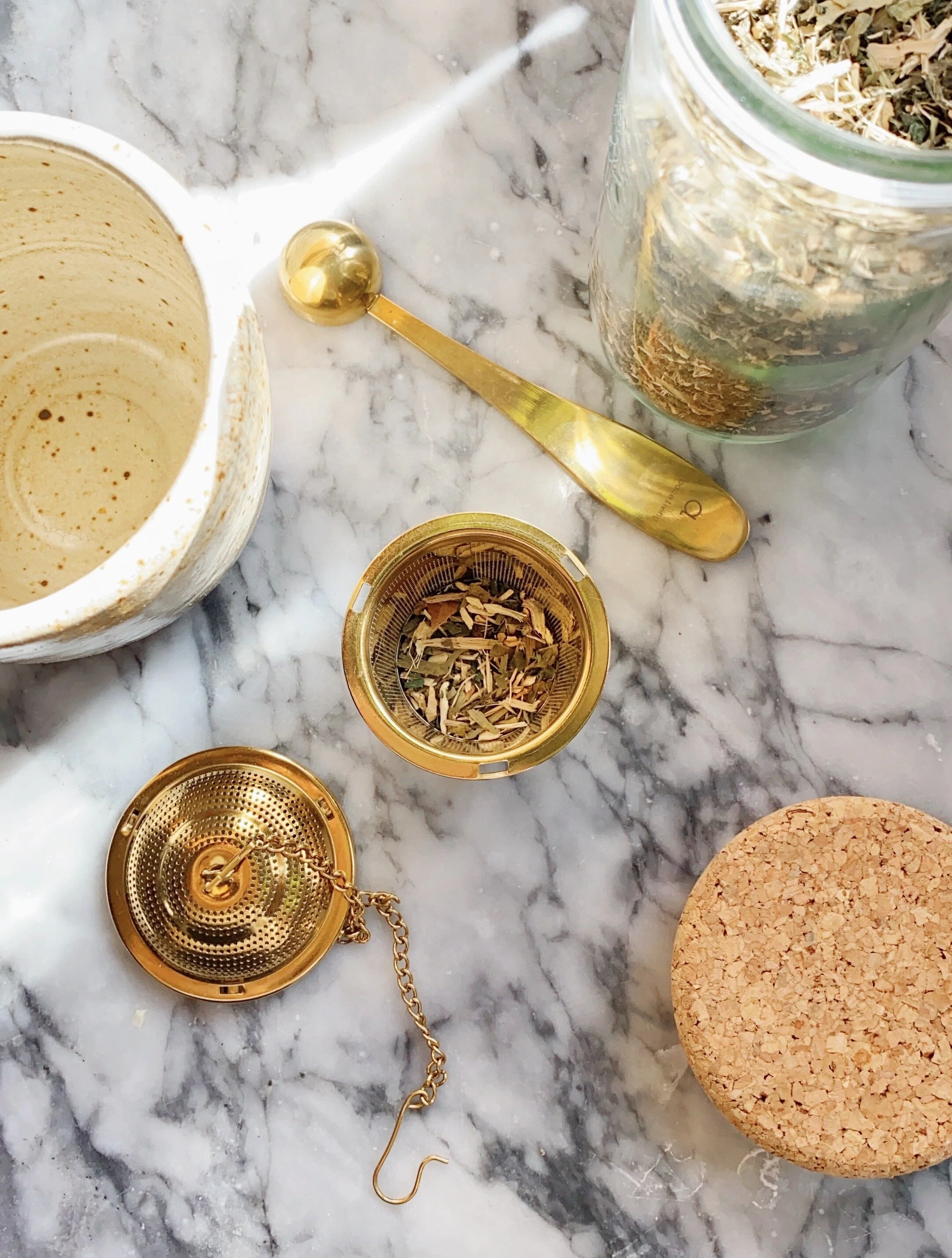
A study found that 11.6 billion microplastic particles are released when one tea bag is steeped in water (and on top of that, 3.1 billion even smaller nano plastic particles are released into the cup). That’s thousands of times higher than the amount of plastic previous found in other food + drink items. (cnn)
Even a lot of premium teas that use all natural fibers in their teabags often use polypropylene to seal the bags.
There currently aren’t any in-depth studies that show how the consumption of microplastics affect our health, so I’m going to play it on the safe side and try to consume the smallest amount I can… at least when I drink tea.
I’ve been using a stainless steel tea strainer that my mom gave me and it’s kind of like putting a little spaceship in your mug. I love it. I’ve dropped some of my favorites below:

Botra Teapot | Gold Stainless Steel Tea Egg | Brass Stem Tea Strainer ( I like to call this one the Golden Snitch) | Wooden Tea Press | Solid Brass Tea Strainer (reminds me of Flight of the Navigator for some reason)
The one in the top photo is one that was given to me by my mom for Christmas. Linking it here.
Do you have one that you use and love? I’d love to add more to my list of tea strainers! Most of the ones I picked look like they’re from an alien world or straight out of Harry Potter, which I am more than OK with.
Pine All-Purpose Cleaner

A great way to use extra trimmings from your Christmas tree is to throw them in a jar with vinegar to create an all-purpose cleaner that smells like the holidays! Not only will it make your home smell like straight up Christmas, it will also keep you from having to buy another bottle of cleaner from the store. White vinegar (aka acetic acid) is a great disinfectant and cleaner on most surfaces. Here’s how you make it!
Fill a jar with leftover pine twigs + needles
Pour white vinegar over the pine twigs to fill the jar
Let is sit out of sunlight for 2-3 weeks
Strain out the pine twigs + needles
Fill a spray bottle halfway with the vinegar
Fill the rest of the bottle with water
Use it to clean your home (just avoid real hardwood floors, granite and marble).
Do you have any other ways you use discarded holiday decor? Twigs make a great addition to a holiday tablescape as well!
Environmentally Friendly Christmas Tree
Getting into the holiday spirit and doing a bit of research: What are the most sustainable options for Christmas trees? I’ll share what I found.

First off, if you’re looking to purchase a tree this year, buying a real tree is much better for the environment than a plastic one (unless you already have a plastic tree at home you can use).
Benefits of purchasing a real tree > a plastic one:
One acre of fir trees can consume 12,000lbs of carbon dioxide from the atmosphere.
Buying from a local farm helps support the economy (and small business owners, yay)!
Christmas trees are grown like a crop, not usually in a forest setting. For every tree cut down, 1-5 are planted in its place. This is great for capturing CO2!
Real Christmas trees can be composted.
If you already have a plastic tree, you’re better off using that than switching over to a real tree. If you can’t buy a real tree for any reason (ex. allergies), try to find a plastic one secondhand. Take care of it and use it for as long as you can.
According to the Carbon Trust, you need to reuse an artificial tree for at least 10 years to keep its environmental impact lower than that of one real tree being grown and transported.
Another great option is to buy a potted Christmas tree. This way, you can use it for years to come… or plant it in your yard! In California, there’s a company called Living Christmas Tree that will allow you to rent a living tree for the season!
Finally, you avoid purchasing a Christmas tree all together. There are a lot of ways to get creative, while still making your home feel festive for the holidays.
Use a rosemary bush as a miniature Christmas tree this year. It’ll give you the endless gift of fresh rosemary and will smell great.
Craft up something with items around the house. Use spare wood, paper, cardboard, etc… and create something to showcase in your house.
Use a plant you already have on hand. A Christmas cactus is never a bad idea.
Do you have other sustainable plans for the holidays? I’d love to hear from you. Happy Holidays!
A Sustainable Thanksgiving

I wanted to share some thoughts on going into Thanksgiving (and the holidays in general) with more of a sustainable mindset. According to the EPA, waste increases by 25% from Thanksgiving to New Year’s Day. That’s a lot of excess waste! There are a lot of simple changes that can be made that won’t ruin your holiday traditions.

Shop locally at your farmers market or local produce market. Food grown locally uses fewer greenhouse gases to get to you, and are usually grown on smaller farms using more sustainable practices. If you can, consolidate your shopping into one trip to minimize the extra miles and save gas.
Buying locally also helps to keep jobs and money in your community’s economy. Plus, local food tends to be fresher and tastier. And don’t forget your reusable bags! My favorite tote is the standard Baggu because it folds up and can fit inside my purse. I also love these bulk bags from The Sunshine Series!

Ditch the disposables. If you’re hosting and you don’t have enough dinnerware + don’t have a budget to get a matching set of ceramic dishes, head to your local goodwill or other thrift store to see what they have. It’s fun to mix and match vintage dishes too!
If you are interested in purchasing a set of matching ceramics, I highly recommend BX ceramics who will make everything to order or a brand like Heath Ceramics, that has a fantastic zero waste program.
If you don’t have room for more items in your house, ask if any of your guests have a set you can borrow.

Save your raw veggie scraps. If you freeze raw veggie scraps, you can make your own veggie stock to use later on. I throw the veggie scraps and water into a pot with some garlic and bay leaves — it’s saves me from having to buy it from the market! If you don’t have room to save them, compost them.

Ask about food allergies/preferences. To keep food waste to a minimum, make sure you know what your guests can eat/want to eat. If 7/8 people don’t like a certain dish, maybe don’t make a huge portion of it.
We had dairy, gluten and nut allergies at our friendsgiving this year (and a lot of vegetarians), so we planned ahead with our dishes to make sure everyone could take part in the feast!

Traveling to visit family or friends for the holidays? Purchase carbon offsets if you can afford it. I use Terrapass, but there are others out there as well. It’s a lot cheaper than you’d think! I spent under $20 to offset my roundtrip to Fort Worth from Burbank last month.
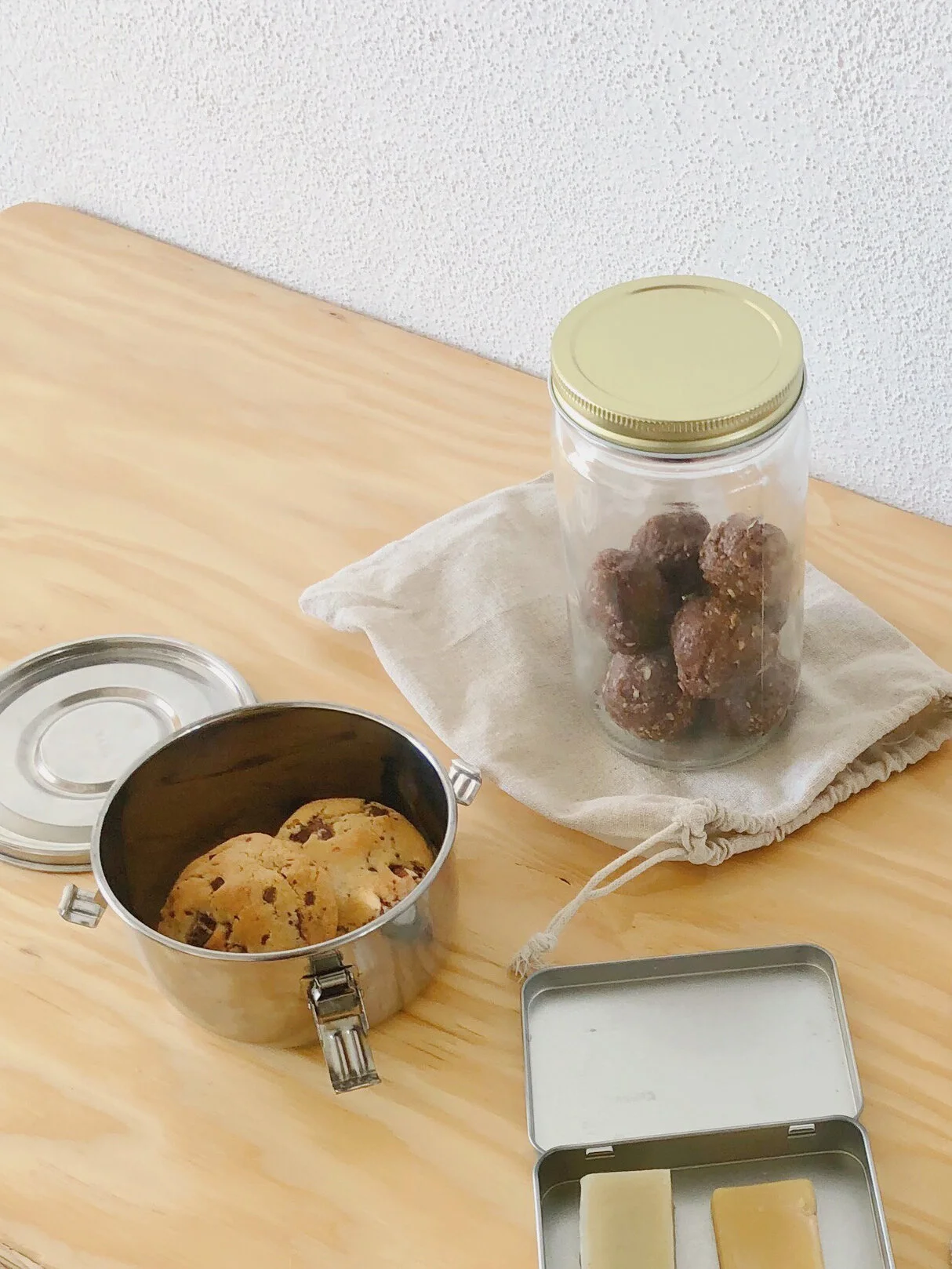
Bring your own containers for leftovers (just in case)! I don’t think I’ve ever been to a Thanksgiving gathering and not been sent home with a plastic Tupperware full of leftovers. This year, I’ll be bringing my stainless steal or glass reusable containers to bring home the goods.

If you’re going out of town, unplug unnecessary electronics to lower your footprint. If you plan to leave the lights on for safety reasons, get a timer so they’re not on 24/7 (and use L.E.D. lightbulbs)!
I’d love to hear if you have any other tips on sustainability for the holidays this year!